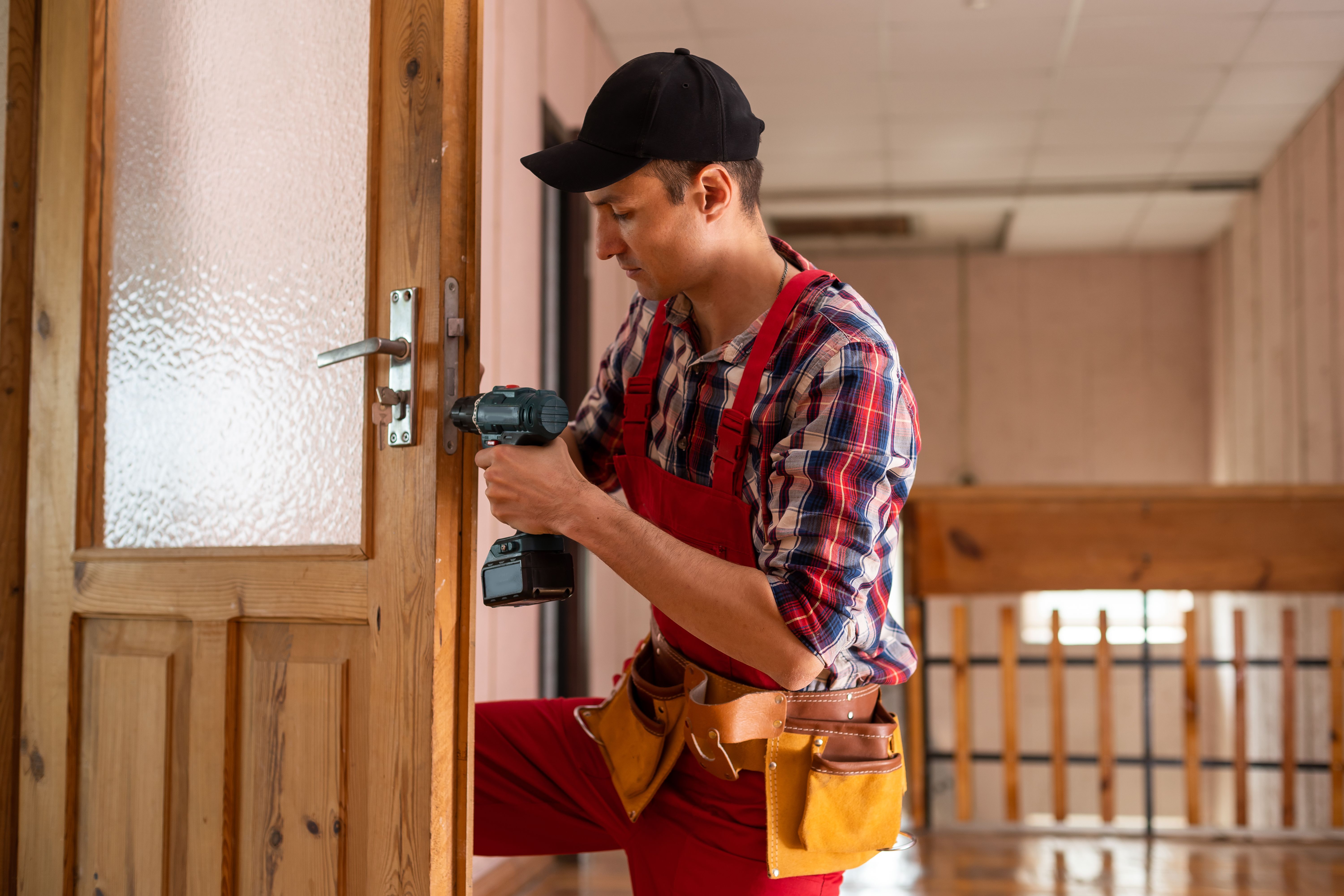

Exterior doors are a high-stakes part of the home: they handle daily use, weather exposure, and the first impression of the entry. When an exterior door feels drafty, sticks, or shows water staining near the threshold, the problem often lives in the details—weatherstripping, thresholds, and how the door sits in the opening.
This guide explains exterior door sealing and weatherproofing basics in a homeowner-friendly way, so you know what to look for and what to plan before replacing or adjusting an exterior door.
Quick takeaways
- Drafts usually come from three places: weatherstripping, threshold, or frame alignment.
- Water management matters. A door that looks fine can still let water in at the sill.
- Threshold height affects flooring transitions. Plan door replacement with adjacent flooring.
- A clean finish is both function and appearance. Trim, caulk lines, and alignment matter.
0) Start by diagnosing the symptom (draft, stick, or water)
Exterior door issues often get described as “the door is bad,” but most problems are more specific. Before replacing anything, define what is happening:
- Draft: you feel air movement, usually at the bottom, corners, or latch side.
- Sticking/rubbing: the door scrapes the floor, rubs the frame, or requires force to close.
- Water: staining near the sill, swelling, or dampness after storms.
- Noisy latch: it closes, but it takes a push or slam to latch.
Different symptoms point to different fixes. A door can be structurally fine and still feel drafty because the seal is worn. A door can also be new and still be drafty if it is not aligned correctly in the opening.
If you are planning a replacement, it helps to document what you notice now so you can confirm the replacement actually solves the problem.
1) Where exterior doors typically leak air
Common draft points include:
- Along the side jambs (worn weatherstripping)
- At the top (compression issues or misalignment)
- At the bottom (threshold/door sweep issues)
If the door doesn’t latch smoothly, it can also indicate alignment issues that reduce compression against weatherstripping.
1a) A simple draft test (no special tools)
If you want to narrow down where the draft is coming from:
- On a windy day, stand inside near the door and feel along the perimeter (top corners, latch side, hinge side, bottom).
- Note whether the draft is concentrated in one location or is consistent around the door.
- Look for visible light at night (a small flashlight outside can help, but even room lighting can reveal gaps).
If the draft is mostly at the bottom, it often points to a threshold or sweep detail. If it is mostly at the latch side or top corner, alignment and compression are usually part of the story.
2) Weatherstripping: what it does and why it wears out
Weatherstripping creates a compressible seal around the door. Over time it can:
- Compress permanently
- Tear or detach
- Lose flexibility
If weatherstripping is damaged or missing in sections, drafts become likely even if the door itself is solid.
2a) When weatherstripping is the main fix (and when it is not)
Weatherstripping is often the main fix when:
- The door closes smoothly and latches well.
- The gaps around the door look consistent.
- The seal material is visibly worn, torn, or missing.
Weatherstripping is usually not the full fix when:
- The door only latches if you push hard.
- The gap is tight in one corner and wide in another.
- The door rubs the frame or threshold.
In those cases, alignment is often the root cause. Replacing seals without correcting alignment can reduce the symptom but not solve it.
3) Thresholds and door sweeps: comfort and water management
The bottom of the door is where:
- Air leakage often happens
- Water can enter if the sill area isn’t managed well
Threshold systems vary by door, but practical planning includes:
- Confirming threshold condition
- Confirming door sweep condition
- Checking for staining or soft materials near the sill (which should be assessed)
If there’s evidence of water intrusion, it’s best to address the cause before focusing on cosmetic trim.
3a) Thresholds and flooring changes
Threshold performance is closely tied to floor height. If you:
- Replace flooring (vinyl, tile)
- Add underlayment
- Level or build up the subfloor
…you can change how the door sweep meets the threshold. This is why door replacement and flooring replacement should be coordinated as one plan.
Helpful related guides:
4) Frame alignment and compression: the “invisible” performance detail
Even good weatherstripping won’t work well if the door frame is out of alignment. If the door:
- Rubs in one corner
- Has uneven gaps around the perimeter
- Doesn’t latch consistently
…it may not compress evenly against seals. This can cause drafts and inconsistent performance.
4a) Latch alignment: the performance detail that feels like “a bad door”
Doors that do not latch smoothly often need:
- Strike alignment adjustments
- Hinge assessment and adjustment
- A plan for the opening condition (out of square openings are common)
If the latch does not line up, the door may not fully compress against weatherstripping even if the seal is brand new.
Hardware planning is part of exterior door performance. This guide covers handing and hardware basics: Door hardware and handing guide.
5) Coordination with flooring: thresholds and transitions
Exterior door replacement often intersects with flooring because thresholds meet interior floor finishes. Planning should consider:
- Vinyl floor height and transitions: Vinyl flooring
- Tile floor height and transitions: Tile installation
If flooring is being replaced, sequencing matters. Planning the order of work reduces rework and improves finish lines: Our process.
5a) The entry zone: water paths matter
Doors do not exist in isolation. Water problems at entries can be influenced by:
- Gutters and downspouts dumping water near the entry
- Splashback at the porch or step
- Wind-driven rain patterns
If you see staining near the sill, treat it as a signal to look at water paths. Painting over it or replacing trim without addressing the water path can lead to repeat problems.
6) Trim, caulk, and the “finished” look
Exterior doors are a focal point. A clean finish often includes:
- Straight trim lines
- Clean caulk joints (not overly heavy)
- Paint or finish that matches the home’s style
If exterior painting is part of the plan, coordinating door and trim details can improve the final look: Exterior house painting.
7) What to measure and photograph for planning
Exterior door work can change based on frame condition and thresholds. Helpful planning info includes:
- Door width/height (and thickness if known)
- Photos from inside and outside
- Close-ups of the threshold/sill area
- Notes about draft locations and latch behavior
This measurement guide is a good starting point: How to measure for door replacement.
7a) The fastest photo set (what to send)
If you want the quickest path to clarity, send:
- One wide photo of the full door from the inside
- One wide photo of the full door from the outside
- Close-up of the hinges
- Close-up of the latch/strike area
- Close-up of the threshold/sill area
Also include short notes:
- Where the draft is felt (bottom, latch side, etc.)
- Whether the door rubs or sticks
- Whether there is any staining or softness near the sill (should be assessed)
7b) Replace vs. adjust: how to think about the decision
Sometimes the best outcome is an adjustment. Sometimes replacement is the cleaner plan. Practical rule of thumb:
- If the door and frame are sound, but seals are worn, adjustment and seal replacement may be enough.
- If the frame is damaged, severely out of square, or the sill area has ongoing water damage, replacement and a deeper plan may be appropriate.
If you are unsure, start with photos and measurements. That usually makes the right next step clear quickly.
8) FAQs
Can weatherstripping fixes solve drafts without replacing the door?
Sometimes, yes—if the door and frame are in good condition and alignment is correct. If the frame is out of square or the threshold is damaged, replacement may be the better path.
Why does my door feel drafty even when it’s closed?
Common causes are worn seals, a misaligned latch, or threshold issues. Draft location (top, sides, bottom) helps narrow the cause.
Does a new exterior door guarantee no drafts?
No product guarantees perfection in every situation. The result depends on installation quality, opening condition, and correct sealing details.
What is the most common cause of drafts on an exterior door?
Worn seals and threshold details are common, but alignment is the hidden cause that surprises homeowners. A door that is slightly out of alignment may not compress evenly, which creates draft paths even with new weatherstripping.
Should exterior doors be coordinated with exterior paint projects?
Often yes. Door replacement can change trim lines and caulk joints, and it can create areas that need paint touch-up. Coordinating door work and exterior painting can improve the finished look and reduce rework.
Next steps
- Door service details: Door installation
- Measurement guide: How to measure for door replacement
- Start a quote request: Request a quote
Need help planning the next step?
Share photos and rough measurements to get a clear yes/no on fit and the right follow-up.