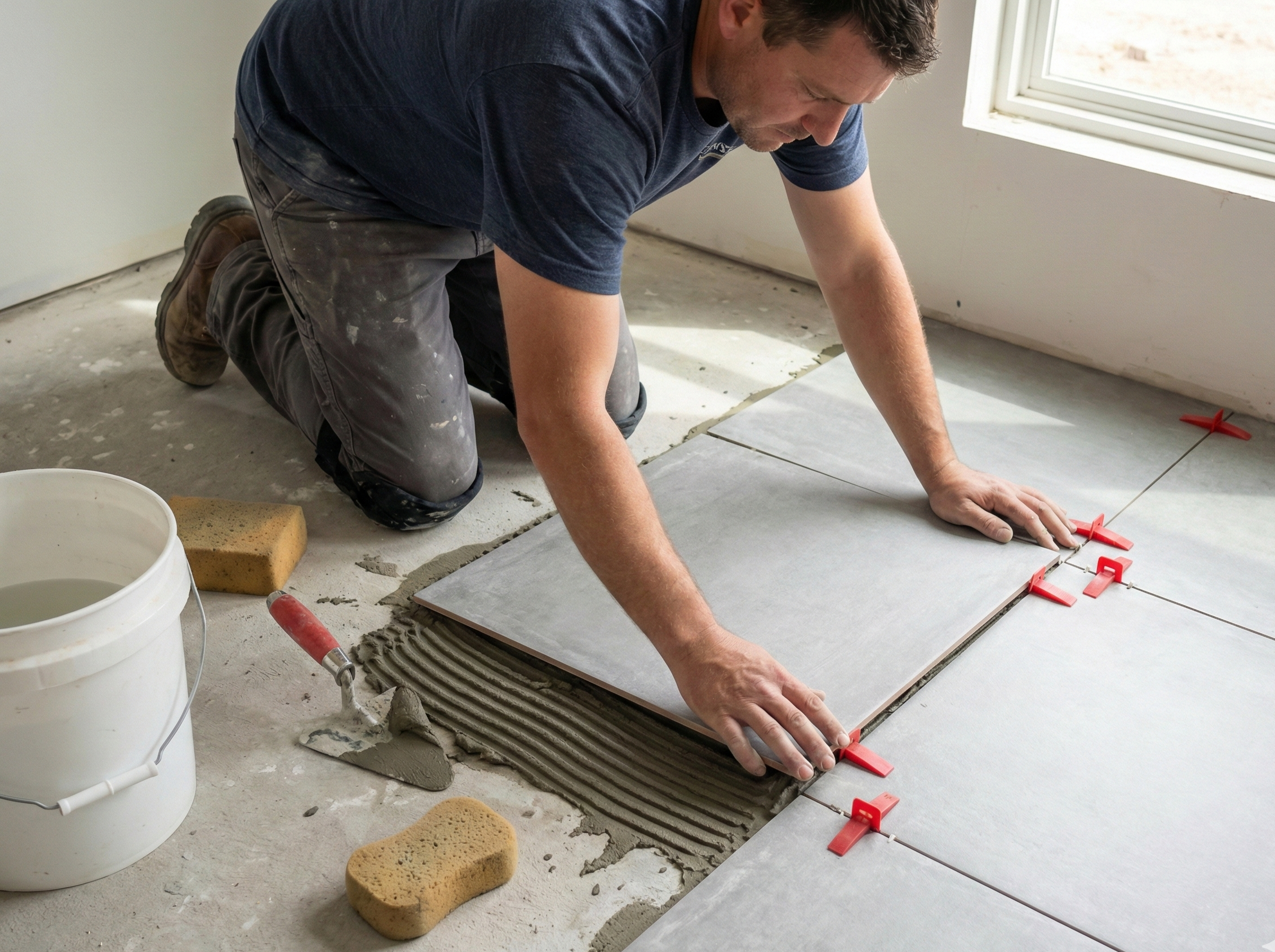

When tile cracks or comes loose, most homeowners ask the same question first: “Can this just be repaired?”
Sometimes the answer is yes. Sometimes the honest answer is that a larger replacement will look cleaner and last longer. The right call depends on matching, the cause of the damage, and where the tile sits in the room.
Quick takeaways
- Spot repair is often a good fit when the damage is isolated.
- Matching tile and grout can decide whether repair is worth it.
- Loose or repeated cracks may point to movement or moisture.
- Doorways, thresholds, and edge details deserve extra attention.
1) Start with the number of affected tiles
If the damage is limited to one or two tiles, repair is often realistic. The odds get better if:
- You still have spare tile
- The grout color can be matched reasonably well
- The damage is not spreading
- The area is not in a visibly tricky edge condition
Once multiple tiles are involved, the conversation often changes. A broader reset can give a cleaner result than a patchwork repair that solves one spot and leaves the surrounding field looking inconsistent.
2) Matching is not a small detail
Many tile repairs are really matching problems:
- Is the tile still available?
- Are the trim pieces still available?
- Will the grout color blend well enough?
- Has the existing tile faded or aged differently?
If you have spare tile, the repair conversation gets much easier. If not, the first step is usually to evaluate whether a match is realistic enough for the result you want.
If you want help with the repair itself, start with Tile Repair. If the room may need a broader reset, see Tile Installation.
3) Cracked tile and loose tile are not always the same problem
Cracks can come from impact damage, but they can also point to movement underneath the tile. Loose tile can point to:
- Bond failure
- Moisture issues
- Substrate movement
- A prior repair that did not solve the cause
That matters because replacing the visible tile without understanding the cause can lead to the same failure again.
If the issue is on a floor, Tile subfloor prep and flatness is a useful companion guide.
4) Repairs near thresholds, corners, and edges deserve closer review
Tile in the middle of a field is usually easier to repair than tile at:
- Doorways
- Outside corners
- Thresholds
- Backsplash ends
- Shower niches or trim-heavy areas
These are the places where the finish quality shows most clearly. If a cracked tile sits beside a metal profile, a threshold, or a visible corner, the repair plan should include those details instead of pretending the tile exists in isolation.
For the edge-detail side, Tile edges and transitions is worth reviewing.
5) When repair is usually the smarter move
Repair is usually the better path when:
- Damage is isolated
- Matching tile is available
- The surrounding tile is solid
- The root cause appears limited or already understood
- The repair area is not part of a much larger failing field
6) When replacement is often the cleaner answer
Replacement often makes more sense when:
- Multiple tiles are failing
- Matching tile is not available
- Grout and caulk issues are widespread
- The failure points to deeper movement or moisture
- The repair would still leave the area looking obviously pieced together
This is especially true if the damage sits in a highly visible line or at a doorway transition where the eye notices inconsistencies fast.
7) Grout and caulk should be part of the decision
Sometimes the visible problem is not only the tile.
Related issues often include:
- Cracked grout
- Missing grout
- Failing caulk at corners
- Water-stained joints
If the joints are part of the problem, Grout Repair vs. Regrout helps frame that decision.
8) What to send before asking for a quote
The fastest quote path usually includes:
- Wide photos of the full area
- Close-ups of the damaged tile
- The number of affected tiles
- Any spare tile or product details
- Notes about leaks, movement, or repeated damage
- Photos of nearby thresholds, corners, or visible edges
That usually tells more of the story than a one-line message saying “I have one cracked tile.”
9) FAQs
Can one cracked tile really be repaired?
Often, yes. The main question is whether a good match is available and whether the surrounding tile is stable enough to make a localized repair worthwhile.
What if I do not have spare tile?
The repair may still be possible, but the matching conversation becomes the first step. Clear photos and any product info you still have help a lot.
If tile is loose, does that mean the whole floor is bad?
Not always. But loose tile does deserve a look at the cause before assuming a quick surface fix is enough.
Are doorway repairs harder?
Usually they are more detail-sensitive because thresholds, adjacent flooring, and edge conditions affect how the finished repair reads.
Next steps
- Repair-focused service page: Tile Repair
- Broader tile scope: Tile Installation
- Planning details: Quote request checklist


Need help planning the next step?
Share photos and rough measurements to get a clear yes/no on fit and the right follow-up.