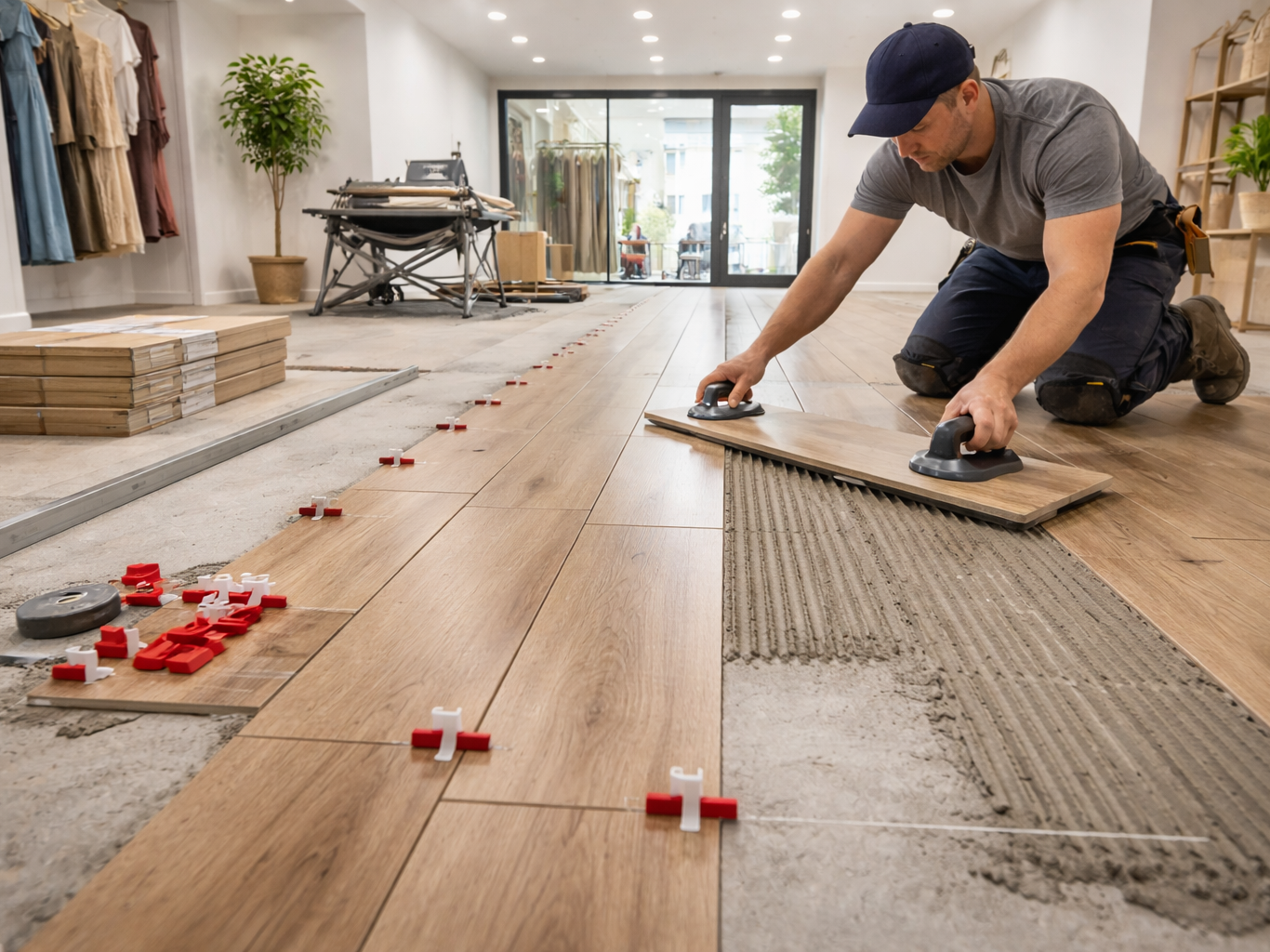
Laminate flooring and vinyl plank get compared constantly because they solve similar problems: they can update a room quickly, they work with many styles, and they usually cost less than a full hardwood floor project. But they do not plan the same way and they do not behave the same way once the home is being lived in every day.
The best choice usually comes down to a few practical questions:
- How much moisture risk does the room have?
- How flat is the subfloor?
- How important is underfoot feel?
- How much do transitions, stairs, and door clearances matter in your layout?
If you are still choosing a product, this guide will help you narrow the right direction before materials are ordered.
Quick takeaways
- Vinyl plank is often the safer pick around moisture. Kitchens, entries, basements, and pet-heavy homes often lean this way.
- Laminate can be a strong fit when you want a specific feel or look. Product quality matters a lot.
- Both products still depend on prep. Flatness, squeaks, and transition planning affect the finished result more than most homeowners expect.
- Edges and thresholds decide whether the job looks complete. Doorways, reducers, stair noses, and baseboard strategy should be part of the plan from the start.
1) Moisture risk changes the answer quickly
If a room has any real chance of repeated moisture, vinyl plank usually deserves a harder look first.
That does not mean laminate is automatically wrong. It means moisture should be treated as a planning factor, not an afterthought. Questions worth asking early:
- Is this a basement or slab-on-grade room?
- Is the room near an exterior entry?
- Do pets, kids, or frequent spills make the room harder on floors?
- Has the space ever had moisture issues before?
Vinyl plank tends to be more forgiving in these environments. Laminate can still work well, but only if the room conditions and product requirements support it.
If you already know you want vinyl, start with Vinyl Plank Flooring. If laminate is still on the table, see Laminate Flooring Installation.
2) Underfoot feel is real, not imaginary
Homeowners often compare these floors visually and forget how they feel once you actually live on them.
Laminate and vinyl plank can feel different in:
- Sound underfoot
- Surface temperature
- Perceived firmness
- How the room “reads” with furniture and footsteps
Product quality changes this a lot. A quick sample in hand is not enough. The better question is how the floor will feel across a full room with the actual subfloor underneath it.
3) Subfloor prep matters for both
Neither floor can hide a bad surface.
Common prep issues:
- Dips and humps
- Squeaks
- Soft spots
- Existing-floor height problems
- Uneven doorway transitions
This is where many flooring projects win or lose their final quality. A product can look great in the box and still feel wrong if the prep is skipped.
If you want a deeper prep breakdown, Subfloor prep for vinyl plank is still useful even if you are deciding between products. The prep mindset carries over.
4) Doorways and thresholds are where quality shows
Most people judge a flooring job at the edges:
- Does the threshold feel smooth underfoot?
- Does the doorway look intentional when the door is closed?
- Did the new floor create awkward height changes?
- Do the trims feel like they belong there?
This is why transition planning matters just as much as product selection. If you want a clean result, think about:
- Reducers and thresholds
- Adjacent tile or existing hardwood
- Stair noses
- Baseboard removal and reinstall vs quarter round
- Door undercuts and clearances
For the transition side specifically, Flooring transition types guide is a good companion read.
5) Stairs and landings make product differences more obvious
If the project includes stairs or a landing, the planning conversation gets more specific. Questions to answer early:
- What stair-nose detail fits the chosen floor?
- How will the top landing transition into the next room?
- Will the same product continue through connected areas?
- Do baseboards, skirt boards, or trim also need to be adjusted?
This is one reason it helps to decide the product before the install date is locked. Stairs and landings are detail-heavy, and the edge treatment is part of the finished look.
6) Laminate vs vinyl plank in common room types
Kitchens
Vinyl often has the advantage because spills, appliance areas, and frequent traffic make moisture tolerance more important.
Bedrooms
Either can work well. The better fit often comes down to feel, sound, and the transition plan at the doorway.
Basements
Vinyl usually deserves the first look because basements often raise moisture or slab questions.
Hallways and connected spaces
The decision is usually less about the room itself and more about how the flooring will flow through multiple doors and thresholds.
7) The hidden cost question: not just material price
Material price matters, but the real project cost is shaped by:
- Prep needs
- Existing-floor removal
- Trim strategy
- Threshold details
- Stair or landing conditions
- Whether doors need to be adjusted
That is why two rooms of similar size can price differently. If one room has three doorways, a stair landing, and an exterior threshold, it is a different install than one open rectangle with no transitions.
8) If you are still unsure, compare the room conditions first
Before choosing laminate or vinyl plank, it helps to gather:
- Room list and rough sizes
- Product links you are considering
- Photos of doorways and thresholds
- Notes about moisture history, pets, or heavy traffic
That usually tells more of the story than looking at samples alone.
9) FAQs
Is laminate more durable than vinyl plank?
It depends on the product and the room. Durability is not just a label issue. Moisture exposure, traffic, and subfloor condition all affect how the floor performs over time.
Which one is better for kitchens?
Vinyl plank often gets the edge because kitchens bring spills, entry traffic, and transition details that reward a more moisture-tolerant plan.
Which one feels more like wood?
That depends on the specific product, but many homeowners care more about the whole system underfoot than the sample itself. Underlayment, subfloor, and room conditions all change the final feel.
Do I need to decide trim and thresholds before install day?
Yes. Thresholds, stair noses, and baseboard strategy are part of what makes the finished floor look intentional instead of pieced together.
Next steps
If you already know the direction, start with the service page that fits your product:
- Laminate: Laminate Flooring Installation
- Vinyl: Vinyl Plank Flooring
- Planning help: Quote request checklist
Need help planning the next step?
Share photos and rough measurements to get a clear yes/no on fit and the right follow-up.