Kitchen projects get more expensive and more frustrating when the order of work is unclear. Most kitchen problems are not caused by one trade doing bad work. They happen because cabinets, counters, backsplash tile, paint, flooring, and trim were never sequenced around each other.
This guide covers the order that usually keeps a kitchen project cleaner and easier to close out.
Quick takeaways
- Define the full kitchen scope first. Cabinets, counters, backsplash, flooring, paint, and trim should be planned together even if they do not all happen on the same day.
- Cabinets usually set the reference lines. Countertops, backsplash timing, hardware alignment, and many final finish details depend on cabinet layout being settled first.
- Flooring timing depends on the scope. In many finish-focused kitchens, heavy cabinet work happens before final flooring so new surfaces do not get damaged.
- Final paint and touch-ups belong near the end. That is what keeps the finished kitchen from getting scuffed during the rest of the project.
1. Start by deciding what is actually changing
Many kitchen scopes are described too narrowly at first:
- “We need a backsplash” may really mean cabinets, counters, paint, and outlet-cover coordination.
- “We need cabinet work” may also mean filler panels, hardware, touch-up paint, and new trim conditions.
- “We need new floors” may also affect door clearances, appliances, thresholds, and where base or shoe trim lands.
The best kitchen sequence starts with an honest list of what is changing and what is staying.
Helpful companion page: Kitchen updates.
2. Demo and repair happen before finish surfaces
Once the scope is clear, the early phase is usually:
- remove what has to come out
- repair wall or substrate issues
- correct obvious layout or level problems
- confirm appliance, sink, and range locations
- make sure cabinet and material selections match the real conditions
This is the phase where small surprises should be discovered, not ignored. If walls are damaged or the substrate is uneven, that should be handled before the visible finish goes in.
3. Cabinets usually come before counters and backsplash
Cabinet layout affects almost everything downstream:
- countertop measurements
- backsplash start and stop points
- outlet cuts and terminations
- filler, scribe, and panel decisions
- hardware alignment and sightlines
That is why cabinets usually need to be installed and settled before countertop measurements are finalized, and why backsplash tile usually comes after counters.
Helpful related guide: Cabinet installation planning.
4. Countertops and backsplash should be planned as one finish line
Backsplash work usually makes more sense after counters are in because:
- the bottom line of the backsplash is confirmed
- edge profiles and height decisions are clearer
- outlet spacing is easier to judge
- tile cuts at the top of the counter land more cleanly
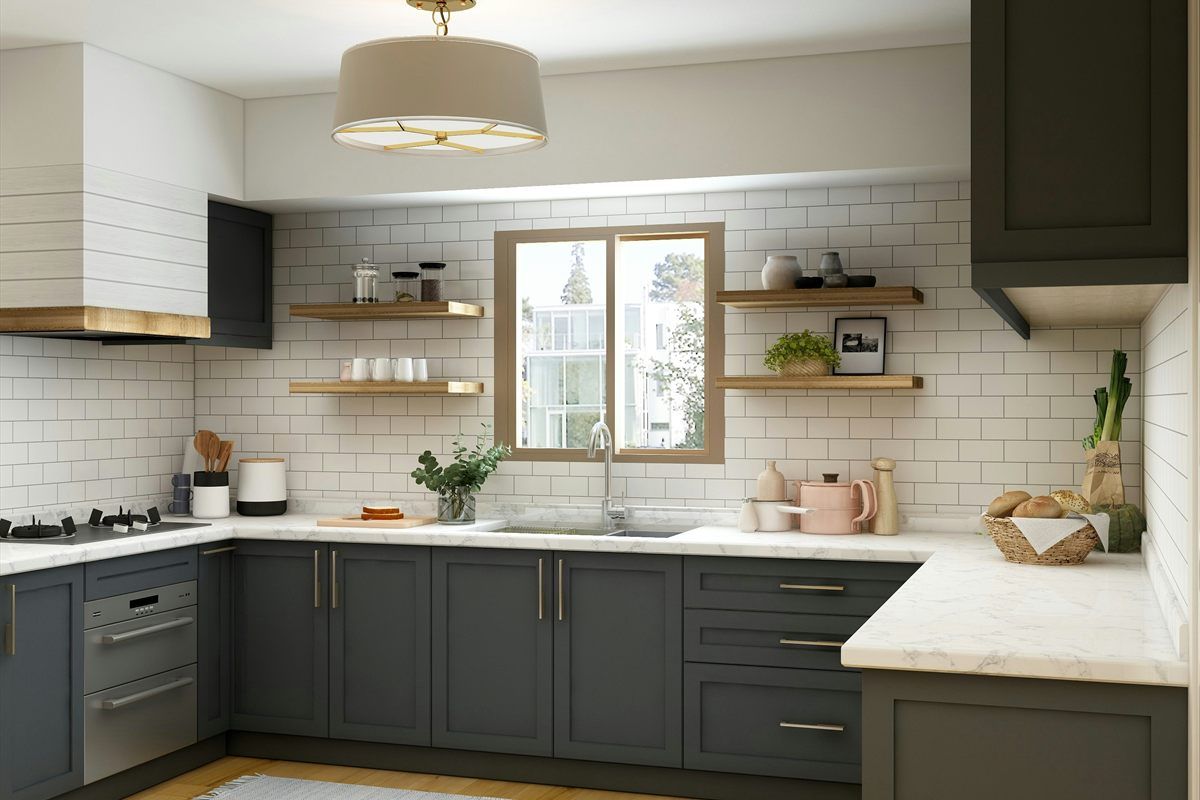
If the backsplash is part of the same kitchen outcome, do not treat it as an isolated tile job. It should be planned around cabinet lines, counter thickness, and where the tile ends at windows, shelves, or open walls.
Helpful related guide: Tile backsplash planning guide.
5. Flooring timing depends on what the kitchen is getting
There is no one-rule answer for floors in every kitchen. The practical question is what protects the finished surface best and what creates the cleanest final transitions.
Common pattern in finish-focused kitchen work:
- heavy cabinet work first
- flooring after the disruptive install steps
- thresholds and door clearances checked near the end
If appliances, adjacent rooms, or doorway heights complicate the plan, flooring may need special sequencing. This is one of the most useful details to talk through early.
Helpful related guide: Vinyl floor transitions and trim.
6. Paint, trim, and hardware should support the final alignment
Final paint and detail work are where the kitchen starts to look finished.
This phase usually includes:
- final wall and trim paint after major disruptive work
- cabinet hardware placement
- touch-ups where old and new surfaces meet
- small drywall corrections that were easier to judge after install
- final caulk and cleanup at the visible transitions
If these details happen too early, they often get redone later. If they happen too late without planning, the kitchen can look almost done but not actually finished.
Helpful related guide: Cabinet painting vs replacing kitchen cabinets.
7. Plan the kitchen around use, not only around trades
If you are living in the home, the practical sequence matters as much as the technical one.
Important questions:
- Does the sink need to stay usable until a certain point?
- Is one side of the kitchen more important to keep functional?
- Are kids, pets, or work-from-home routines affecting access?
- Is the project tied to move-in, guests, or listing photos?
A kitchen that has to stay partly usable may need a phased approach. That is not unusual. It just needs to shape the plan up front.
8. What to send for a faster kitchen quote
The best kitchen quote requests usually include:
- a wide photo of the full kitchen
- close-ups of the cabinet and backsplash walls
- notes about what is changing and what is staying
- product links for cabinets, flooring, tile, counters, and hardware if selected
- rough measurements if you have them
- your timeline and whether the kitchen must stay partly usable
If you want a simple structure, use the quote request checklist.
FAQs
What usually happens first in a kitchen remodel?
Scope definition and prep. After that, cabinets often set the reference lines that the rest of the kitchen depends on.
Should backsplash tile go in before countertops?
Usually no. In most finish-focused kitchens, the backsplash is easier to plan and install cleanly after the countertop line is established.
Do floors always go in last?
Not always, but in many kitchen updates the heavy cabinet work happens before final flooring so the new floor does not get damaged or boxed into avoidable transition problems.
What causes kitchen projects to drag out?
Late material decisions, unclear cabinet or counter details, missing trim pieces, and trying to sequence several finish trades without deciding the order of work first.
Next steps
If you are planning a broader kitchen update, start with Kitchen updates.
If you are still clarifying the cabinet side of the project, read Cabinet painting vs replacing kitchen cabinets.
Need help planning the next step?
Share photos and rough measurements to get a clear yes/no on fit and the right follow-up.