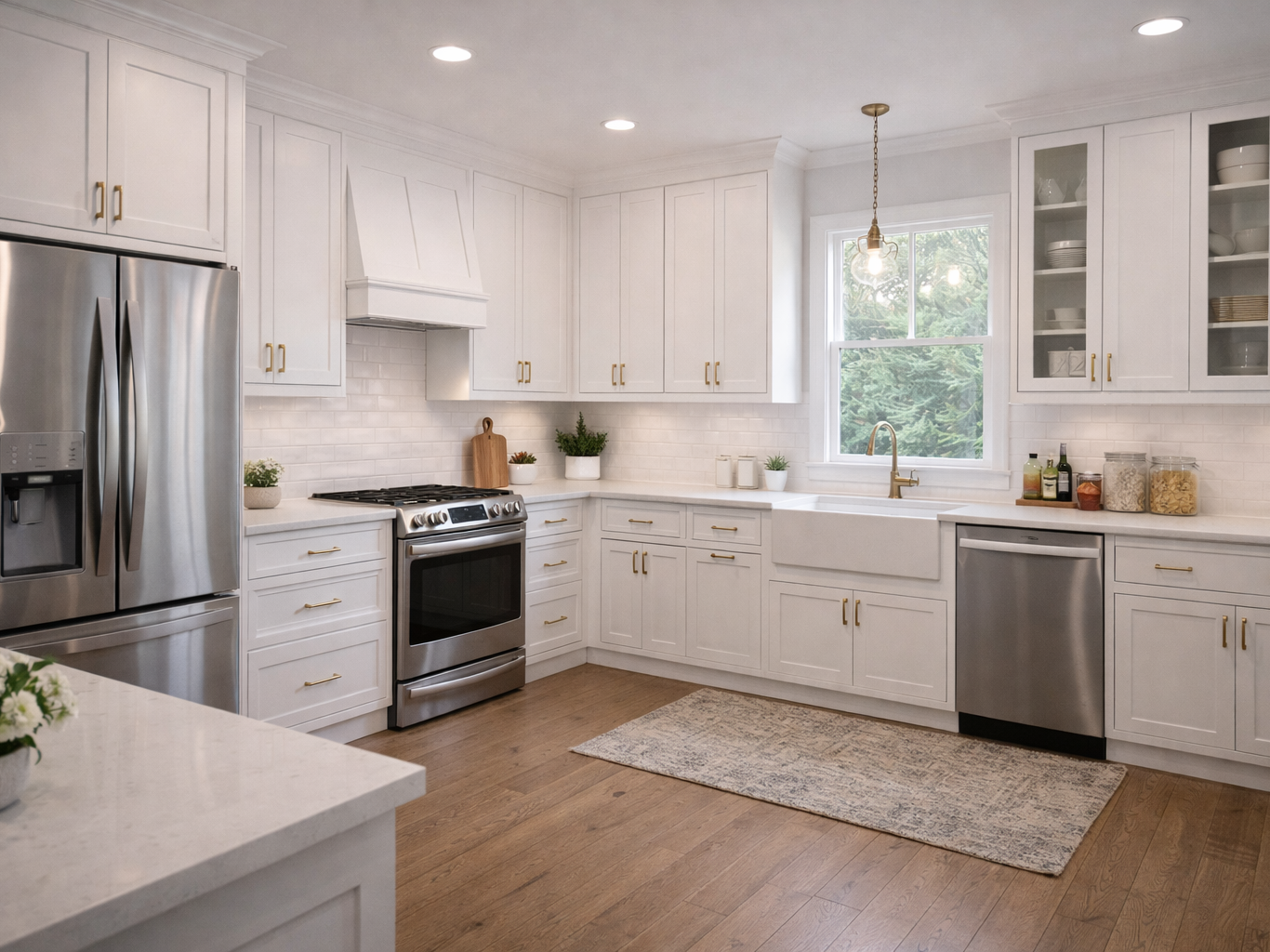
Backsplash decisions usually look simple at first: pick a tile pattern you like and install it. In practice, the material changes much more than the look. It affects cuts, edge planning, maintenance, grout decisions, and how forgiving the finished backsplash feels when real kitchen light hits it.
The best backsplash material is usually the one that fits the kitchen you actually have, not the most dramatic sample board.
Quick takeaways
- Ceramic and porcelain are often the most straightforward materials to plan. They are usually easier to pair with common kitchens, grout options, and edge details.
- Glass and natural stone change the install conversation. Those materials often make wall condition, cut quality, grout choice, and maintenance more important.
- Variation-heavy tile needs a more deliberate layout plan. Handmade looks, zellige-style surfaces, and strong color movement can look great, but they should not be treated like perfectly uniform tile.
- Material choice affects more than maintenance. It also changes where tile should stop, what edge profile makes sense, and how the backsplash reads against cabinets and counters.
1. Start with the kitchen conditions, not only the sample
Before comparing materials, it helps to define the kitchen:
- Is the backsplash a small standard-height run or a bigger focal area?
- Are there many outlets and switches?
- Does the kitchen have open ends or windows?
- Is the countertop busy or visually simple?
- Do you want the backsplash to blend in or stand out?
Those answers usually matter more than the name of the material by itself.
Helpful companion page: Kitchen updates.
2. Ceramic and porcelain are often the easiest materials to live with
For many kitchens, ceramic or porcelain backsplash tile is the most practical starting point.
Why:
- broad range of sizes and looks
- easier to coordinate with grout
- common edge and trim options
- usually simpler maintenance than natural stone
- often easier to keep visually consistent across a full run
That does not mean ceramic or porcelain is boring. It means the material often gives you more control over the finished layout and less guesswork around upkeep.
Helpful related page: Kitchen backsplash installation.
3. Glass backsplash tile changes the precision and visibility
Glass can create a bright, clean look, but it is less forgiving in a few important ways:
- cuts can feel more visible
- wall irregularities may read differently
- backing, transparency, or color depth can shift the appearance
- grout and setting consistency matter more
Glass is not automatically a bad choice. It is just not the same conversation as a standard ceramic field tile. The cleaner the wall and the clearer the layout, the better glass tends to look.
4. Natural stone changes both the look and the maintenance plan
Stone backsplashes can feel warm and elevated, but the planning questions are different:
- how much variation do you want?
- what finish fits the kitchen best?
- does the material need sealing?
- how will the tile meet the counter and edges?
- how much movement in tone is too much for the room?
Natural stone can be a strong fit when the rest of the kitchen supports that texture and variation. It is less useful when the goal is a highly uniform, low-variation backdrop.
5. Handmade and zellige-look materials need honest layout expectations
Some of the best-looking backsplash installs use materials with visible variation. But those materials should be chosen because you want that movement, not because you expect them to behave like perfectly regular tile.
Important planning questions:
- Do you want visible lippage or handmade character?
- Are you comfortable with tone variation from tile to tile?
- Will the kitchen lighting exaggerate that variation?
- Is the countertop already visually active?
Variation-heavy backsplash material often looks best when the rest of the kitchen gives it space to breathe.
Helpful related guide: Kitchen backsplash height guide.
6. Grout and edge decisions should be made with the material, not after it
Backsplash material selection should happen together with:
- grout color
- joint width
- edge profile or termination method
- countertop transition detail
- where the backsplash stops at open ends or windows
Those are finish decisions, not afterthoughts. They change how the backsplash reads in the kitchen every day.
For example:
- a uniform porcelain with a tight grout choice reads cleaner and quieter
- a variation-heavy tile with contrasting grout reads more patterned and more visible
- open-ended walls usually need a clearer edge decision than fully enclosed runs
Helpful related guide: Tile edges, trims, and transitions.
7. What to send for a faster backsplash-material conversation
Usually this is enough:
- a wide photo of the full kitchen wall
- close-ups of outlets, corners, windows, and open ends
- countertop and cabinet photos
- links to the tile options you are deciding between
- whether you want the backsplash quiet, bold, warm, or highly uniform
If you are comparing several materials, that is helpful to say directly. The right answer may come down to layout, maintenance, and the visual weight of the rest of the kitchen.
FAQs
What backsplash material is easiest to maintain?
Ceramic and porcelain are often the simplest for many kitchens because they are generally straightforward to clean, plan, and coordinate with grout and edges.
Is glass backsplash tile harder to install?
It often requires more precision and can make cut quality and layout decisions feel more visible. That does not make it wrong, but it changes the planning conversation.
Is natural stone a good backsplash choice?
It can be, especially if you want warmth and variation. It just needs honest planning around maintenance, sealing, movement in tone, and how it fits the rest of the kitchen.
What helps with a backsplash-material quote?
Kitchen photos, tile links, and notes about whether you want the backsplash to blend in or stand out. That gives the material conversation a much better starting point.
Next steps
If you are still defining the whole kitchen scope, start with Kitchen updates.
If you are ready to send the kitchen photos and tile options now, use Request a quote.
Need help planning the next step?
Share photos and rough measurements to get a clear yes/no on fit and the right follow-up.