
Many drywall repairs technically “fill the hole,” but still look obvious after paint. That’s because the real challenge is not filling—it’s making the repair blend: flatness, feathering, texture match, and a primer/paint plan that avoids flashing.
This guide explains the common drywall hole types, repair approaches, and the texture matching steps that help repairs disappear.
Quick takeaways
- Feathering matters more than filling. Wide, smooth transitions are what hide patches.
- Texture matching is a skill. It often takes multiple passes and some testing.
- Primer prevents flashing. Repairs can absorb paint differently than the surrounding wall.
- Paint sheen affects visibility. Higher sheen makes patch differences easier to see.
1) Identify the hole type (because the fix changes)
Common drywall hole situations:
- Small nail holes and pin holes
- Anchor holes and medium dents
- Larger holes (doorknob damage, impact damage)
- Cutouts (access holes for plumbing/electrical)
- Crumbled or soft drywall edges
The repair strategy changes with size and with whether the drywall paper is damaged.
1a) A basic tools and materials list (so you know what the work involves)
You do not need to buy a workshop to plan drywall repairs, but it helps to know what a typical repair involves:
- Drywall compound (and sometimes a setting-type compound for faster builds)
- Putty knives (small and wide) and a mud pan
- Sanding block or sanding sponge
- Dust control (drop cloths, shop vacuum attachment, or simple plastic barriers)
- Primer (especially important over fresh compound)
- Texture tools if needed (spray texture, sponge, knockdown knife, or a matching method based on your existing texture)
If you are getting quotes, asking how dust will be controlled and how texture will be matched is a good way to set expectations.
2) Small holes: nail holes and small anchors
Small holes are usually straightforward, but the finish can still look bad if:
- The fill isn’t sanded flush
- The edges aren’t feathered
- The paint sheens don’t match
Even “tiny” repairs need a plan if your walls are in bright light or if you’re using a higher sheen. See: Paint sheen guide.
3) Medium holes: anchors, dents, and repeated damage
Medium holes often require:
- Cleaning up damaged paper edges
- Building a stable base fill
- Feathering wider than you expect
If the wall has multiple small repairs, it’s often better to treat the wall as a “repair and repaint” project rather than trying to spot touch every defect.
4) Larger holes: when a patch is required
Larger holes usually require a patch approach that restores a stable surface plane. The end goal is:
- The patch is secure
- The surface is flat
- The edges are feathered so paint doesn’t reveal a “patch halo”
Large repairs also often intersect with door stops and traffic patterns. If a doorknob keeps hitting the same spot, solving the cause helps protect the repair.
4a) Patch approaches by size (what changes and why)
Homeowners often hear “we will patch it” and assume it is one method. In practice, the method changes with hole size and what is behind the drywall:
- Small anchor holes: clean the edges, fill, let dry, sand, repeat as needed, then prime.
- Medium holes (larger than a coin): a patch may be needed, or the area may be cut clean and rebuilt so the surface plane stays flat.
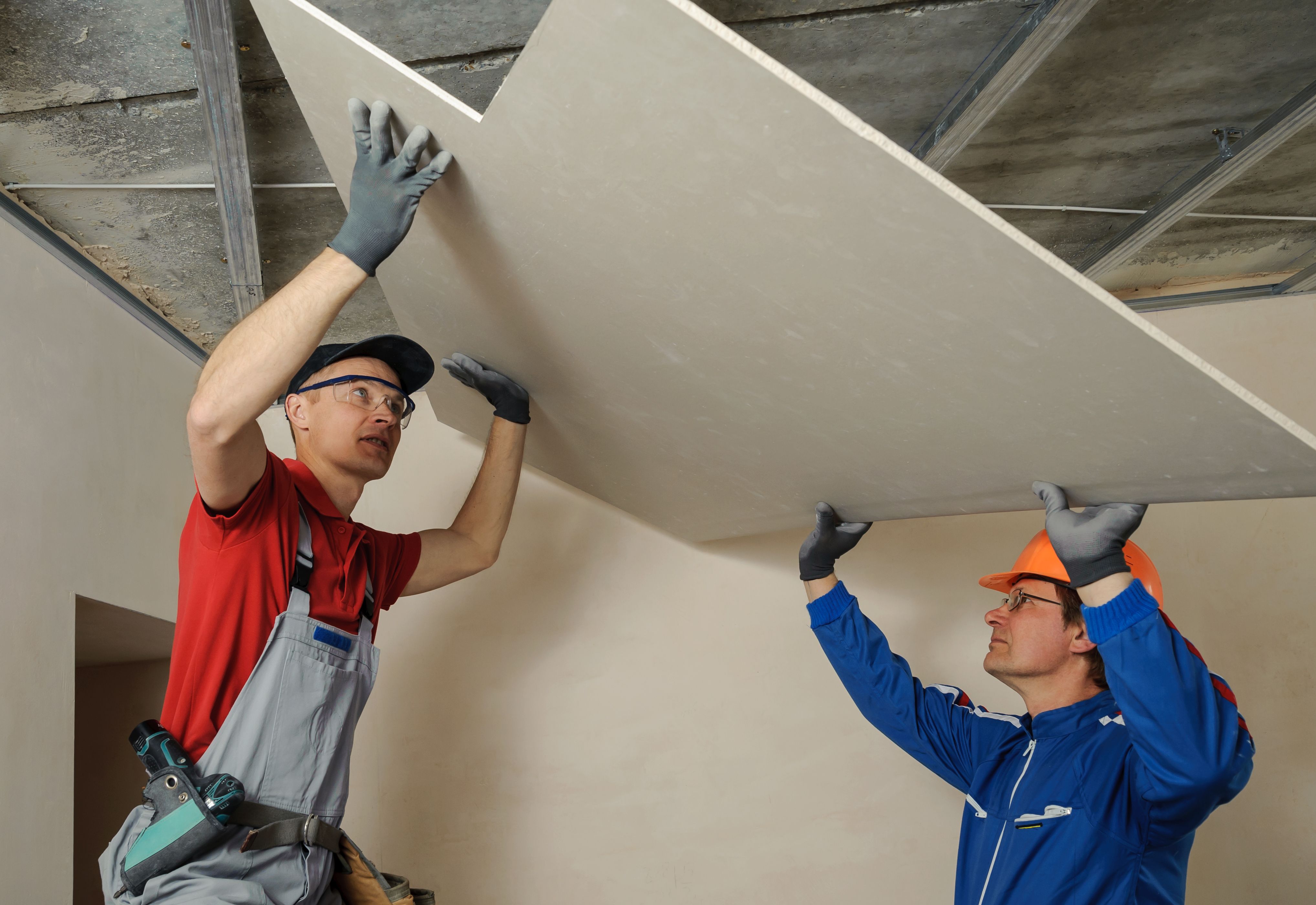
- Large holes: the damaged section is typically cut back to a clean shape, a backing or support is added, and a new drywall piece is installed so the repair is structurally stable.
The consistent theme is the same: the repair has to be stable first, then finished. If the patch flexes, the joint line and paint will often show later.
5) Damaged drywall paper: why it can look rough after paint
When drywall paper is torn, paint can:
- Raise fibers
- Highlight rough edges
- Create uneven absorption
Paper damage often needs specific prep so the final paint doesn’t emphasize the repair area.
5a) What to do about torn paper edges (the “fuzzy patch” problem)
Torn drywall paper can create a repair that looks fine until paint hits it. A better plan usually includes:
- Removing loose fibers so they do not bubble under paint
- Sealing the damaged area so it does not absorb differently than the rest of the wall
- Building compound in thin layers so the surface stays flat
This is a common reason patches “flash” after painting. The fix is not more paint. The fix is getting the surface stable and sealed before the final paint system goes on.
6) Texture matching: the make-or-break step
Texture matching is where repairs become invisible (or not). Practical things to understand:
- Texture looks different when wet than when dry.
- Primer and paint can soften or sharpen texture appearance.
- Lighting angle can make texture mismatch obvious.
Common texture situations
- Smooth walls (no texture): the goal is a perfectly flat repair.
- Light orange peel: requires subtle texture consistency.
- Heavy texture or knockdown: requires pattern control and edge blending.
Texture matching often involves testing a small area, letting it dry, and adjusting.
6a) A simple texture matching method (test, blend edges, then stop)
If your walls are textured, the best results usually come from a controlled approach:
- Create a smooth base first. Get the patch flat and feathered. Texture cannot hide a hump or ridge.
- Test the texture on a small area. Try a small spot and let it dry. Adjust before you texture the entire repair.
- Blend the edges wider than the repair. Texture that stops abruptly at the patch boundary is what makes repairs obvious.
- Prime before final judgment. Primer often reveals whether the texture blend is working and reduces paint absorption differences.
Texture matching is one of the main reasons drywall repair is hard to “spot fix” perfectly. Planning for a bit of blend area and repainting the wall when needed is often the cleanest path.
7) Primer strategy: how to prevent flashing
Repairs can absorb paint differently than surrounding walls. That difference is what causes flashing (a different sheen or tone at certain angles).
A good primer strategy depends on:
- How large the repair area is
- Whether the wall is being fully repainted
- The chosen sheen (higher sheen shows differences more)
If you’re painting the room, planning paint + repairs together is the easiest way to avoid patch “ghosts”: Interior painting prep checklist.
7a) When a full-wall repaint is the cleanest finish
Small patches can sometimes be touched up, but touch-ups often show in strong light or in higher sheens. A full-wall repaint is often worth it when:
- The patch is in a high-visibility area (main hallway, living room, near large windows).
- The wall has multiple repairs.
- The existing wall paint is older and has been cleaned or faded.
Repainting the full wall gives you one consistent paint film thickness and reduces the chance of a visible “patch zone.”
8) The “paint-ready” standard (what to expect)
Homeowners often ask, “Will the patch disappear?” The honest answer depends on:
- Lighting (strong sunlight shows more)
- Wall texture (some textures are harder to match perfectly)
- Paint sheen (higher sheen shows more)
The goal is a repair that blends well in normal viewing conditions and photographs cleanly.
9) When to repair vs. replace drywall
If there is widespread damage, repeated moisture issues, or severe paper delamination, replacement can sometimes be more efficient than patching. This guide helps you think through that decision: Drywall repair vs. replace.
10) FAQs
Why do patches show up after painting?
Because the surface plane, texture, or porosity differs from the surrounding wall. Feathering and primer strategy are what prevent that.
Can I touch up paint over a patch?
Sometimes, but touch-ups often flash, especially in certain sheens. Repainting a full wall is often the cleaner way to blend.
What’s the easiest way to get a clean finish?
Treat drywall repair and painting as one project: repair, prime, repaint consistently.
How long should a patch dry before painting?
It depends on patch size, compound type, and room conditions. Many repairs need more than one coat of compound, and each coat needs time to dry before sanding and recoating. Rushing the dry time can lead to shrinkage, cracking, or a visible patch edge after paint.
Next steps
If you want the patch to disappear, plan repairs and repainting together whenever possible.
- Drywall service details: Drywall
- Paint planning: Interior painting prep
- Start a quote request: Request a quote
Need help planning the next step?
Share photos and rough measurements to get a clear yes/no on fit and the right follow-up.