
Door replacement seems simple until measurements and terms get involved. The fastest way to avoid ordering the wrong door (or discovering surprises on install day) is to measure the right things and identify whether you need a slab door or a prehung door.
This guide walks through what to measure for interior and exterior door replacement and what information helps confirm what’s needed quickly.
Quick takeaways
- Know the difference: slab = door only; prehung = door + frame.
- Measure multiple points. Openings can vary top to bottom.
- Handing matters. Swing direction and hinge side affect ordering.
- Photos help. Trim, hinges, and thresholds change the plan.
0) Before you measure: gather a few simple tools
You do not need specialized tools to start. Helpful basics:
- Tape measure
- Notepad (or notes app)
- Phone camera
- A small level (optional but helpful)
If you can, write measurements down as you take them and label which door they belong to (example: “Hall bath door” or “Front entry door”). Small labeling habits prevent mix-ups.
1) Slab vs. prehung: start here
Slab door replacement
A slab replacement is usually considered when:
- The existing frame is in good shape
- The jamb and hinges are reusable (or can be matched)
- You want to keep existing trim and casing
What a slab replacement usually involves:
- Removing the old slab
- Hanging the new slab on the existing hinges (or matching hinge locations)
- Making sure the latch and strike align
- Adjusting clearances so the door swings and latches cleanly
A slab replacement can be efficient, but it depends on the frame being in good shape and reasonably square.
Prehung door replacement
A prehung door is often considered when:
- The frame is damaged or out of square
- You want to change the door size or style significantly
- You want a cleaner “reset” of the opening
What a prehung replacement usually involves:
- Removing the old door and frame (or at least the door frame components)
- Installing a new frame that is square, plumb, and secure
- Installing trim/casing work as needed
- Setting a consistent reveal and smooth latch behavior
Prehung replacement is often the cleanest way to solve a frame that is out of square, damaged, or inconsistent.
If you’re unsure, it’s normal to start with photos and basic measurements, then confirm the approach. See our service overview: Door installation.
2) Measuring basics: what you need for any door
At minimum, you want:
- Door width
- Door height
- Door thickness (if known)
Also confirm:
- Interior vs. exterior
- Swing direction and hinge side (handing)
2a) Make a quick door list
If you are replacing multiple doors, start with a simple list:
- Door location (example: “Bedroom 1”, “Basement entry”)
- Interior or exterior
- Slab or prehung (best guess is fine)
- Any problems you want to solve (rubbing, drafts, does not latch)
This helps project planning and prevents ordering mistakes.
3) Measure the existing door slab (interior)
For many interior doors, measuring the existing slab is a good starting point:
- Measure width in three places (top, middle, bottom)
- Measure height in two places (left and right)
- Measure thickness (often standard, but confirm if possible)
Older homes can have non-standard sizes, so multiple measurements matter.
3a) Slab door details that can matter for a smooth swap
If you are considering a slab replacement (keeping the existing frame), these additional details can help:
- Hinge count: how many hinges are installed.
- Hinge size: hinges come in different sizes; matching can matter for fit.
- Hinge locations: distance from the top of the door to the top hinge, and from the bottom to the bottom hinge.
- Handle height: where the knob/lever sits.
You do not have to measure every hardware detail to request a quote, but if you are ordering a slab yourself, hinge locations and hardware prep are common “gotchas.”
If you want a deeper look at hardware planning and handing, see: Door hardware and handing guide.
4) Handing: hinge side and swing direction
Handing is one of the most common sources of ordering mistakes.
Practical way to confirm:
- Stand on the side the door swings toward (the side you pull it open toward you).
- Note which side the hinges are on.
If hinges are on the left, it’s left-hand from that perspective; if on the right, right-hand.
If you’re not sure, photos from both sides of the opening usually answer it quickly.
4a) Photo tip for handing
Take one photo from each side of the doorway that clearly shows:
- The hinges (which side they are on)
- The direction the door swings (into the room or out of the room)
Handing confusion is one of the most common ordering problems, and good photos usually solve it in seconds.
5) Measure the frame opening (for prehung considerations)
If a prehung door may be needed, measurements often include:
- Opening width and height
- Jamb depth (wall thickness)
- Condition of the frame and trim
Openings are often not perfectly square. That’s why photos and multiple measurements help.
5a) Check for out-of-square and clearance issues (simple checks)
If you suspect the frame is out of square, these simple checks help set expectations:
- Diagonal check: measure diagonals corner-to-corner across the opening. If the diagonals differ noticeably, the opening may be out of square.
- Gap check: look at the gap between the door and the frame. If gaps are tight in one corner and wide in another, alignment may be part of the problem.
- Rub points: note where the door rubs (top corner, hinge side, latch side).
This does not replace a professional assessment, but it helps you describe what is happening.
6) Exterior doors: thresholds and weather details matter
Exterior doors add considerations:
- Threshold condition
- Weatherstripping condition
- Sill pan and water management (where applicable)
- Clearance and floor transitions
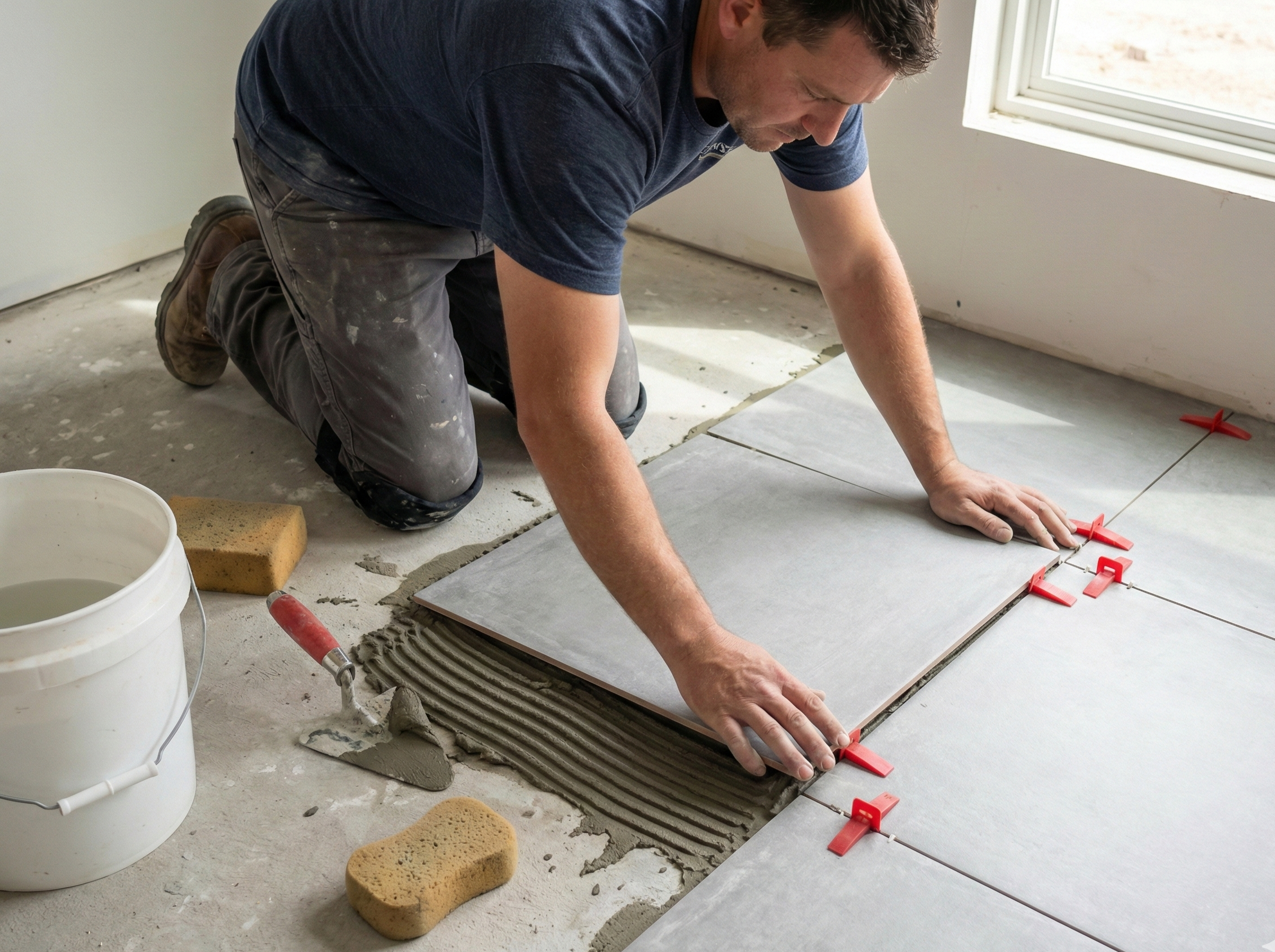
If you’re replacing flooring (vinyl or tile) near the door, coordinate heights and transitions early: Vinyl flooring and Tile installation.
6a) Exterior door measurement and condition notes
Exterior doors often involve additional planning details:
- Threshold condition: is it solid, loose, or worn?
- Draft location: do you feel air at the bottom, sides, or top?
- Water history: any staining or soft materials near the sill should be assessed.
- Storm doors: if you have a storm door, it can affect clearance and hardware planning.
If your door feels drafty or the latch does not engage smoothly, it can indicate alignment issues that should be planned into the work.
For weather performance basics, see: Exterior door sealing basics.
7) What photos help confirm what’s needed
To speed up planning, include:
- A wide shot of the whole door from both sides
- Close-ups of hinges
- Close-up of the latch/strike area
- Close-up of the threshold (for exterior doors)
- Any damage areas (rot, cracks, loose trim)
If you’re requesting a quote, this checklist makes it easy: Quote request checklist.
7a) The fastest photo set (what to send)
If you want the quickest path to clarity, send:
- One wide photo of the full door from the inside
- One wide photo of the full door from the outside (for exterior doors)
- One close-up of hinges
- One close-up of the latch and strike plate area
- One close-up of the threshold/sill area (exterior doors)
If possible, include one photo with the tape measure visible on the door width. Visual context reduces back-and-forth.
7b) Copy/paste message template
If you want a simple template, use this:
Door location: _
Interior/exterior: _
Slab or prehung (best guess): _
Door size (W x H): _
Notes (rubbing, drafts, latch issues): ___
Photos: attached
Then send it through our quote request page: Request a quote.
8) FAQs
Can you replace just the door slab and keep the frame?
Sometimes. It depends on frame condition, hinge alignment, and door sizing. Photos and measurements help confirm whether slab replacement is appropriate.
Why do doors rub after replacement?
Rubbing can come from out-of-square frames, changes in flooring height, or hinge alignment issues. Planning clearances early helps.
Do I need to measure the rough opening?
Not always for initial planning, but rough opening can matter for certain prehung installs. Start with the existing door and frame measurements plus photos.
What if my door is not a standard size?
That is common in older homes. Measuring multiple points and providing photos helps confirm the best approach. In some cases, a prehung replacement and frame adjustment is the cleanest way to get consistent gaps and smooth operation.
Should I replace doors before or after flooring?
It depends on the project. Flooring height changes can affect door clearance and thresholds. If both are part of your plan, coordinating details early prevents rework: Vinyl flooring and Tile installation.
Next steps
- Door service details: Door installation
- Flooring coordination: Vinyl flooring
- Start a quote request: Request a quote

Need help planning the next step?
Share photos and rough measurements to get a clear yes/no on fit and the right follow-up.