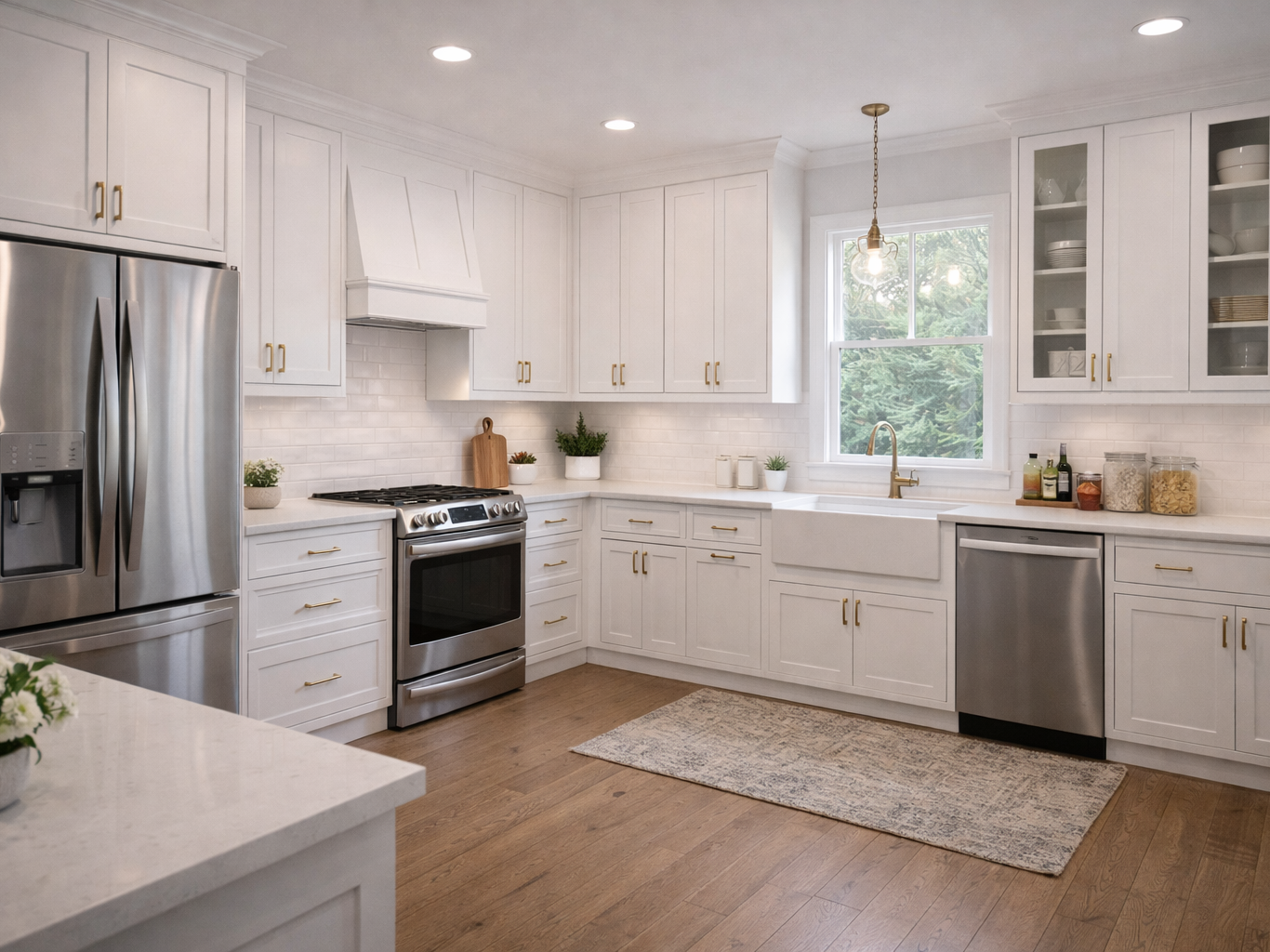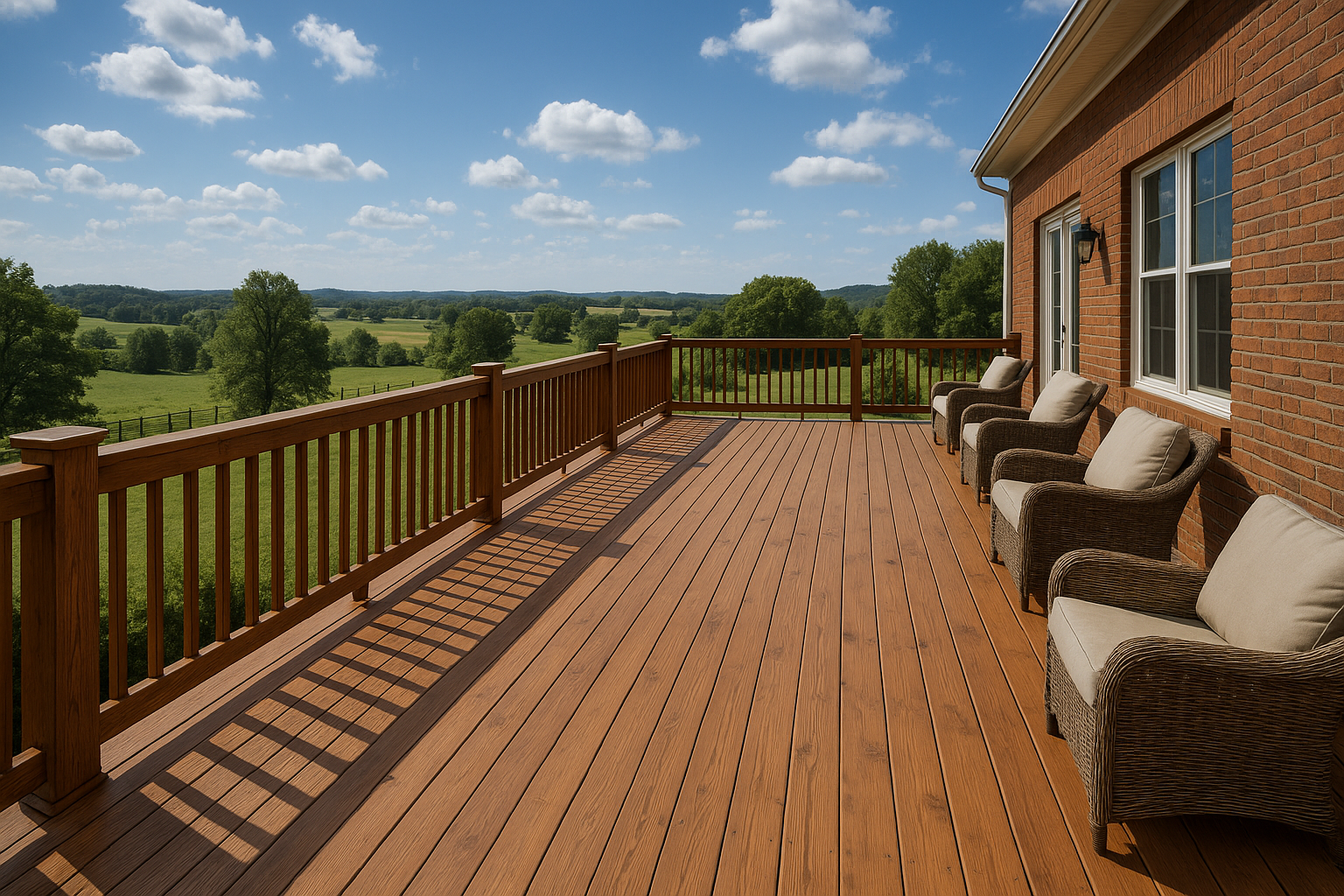
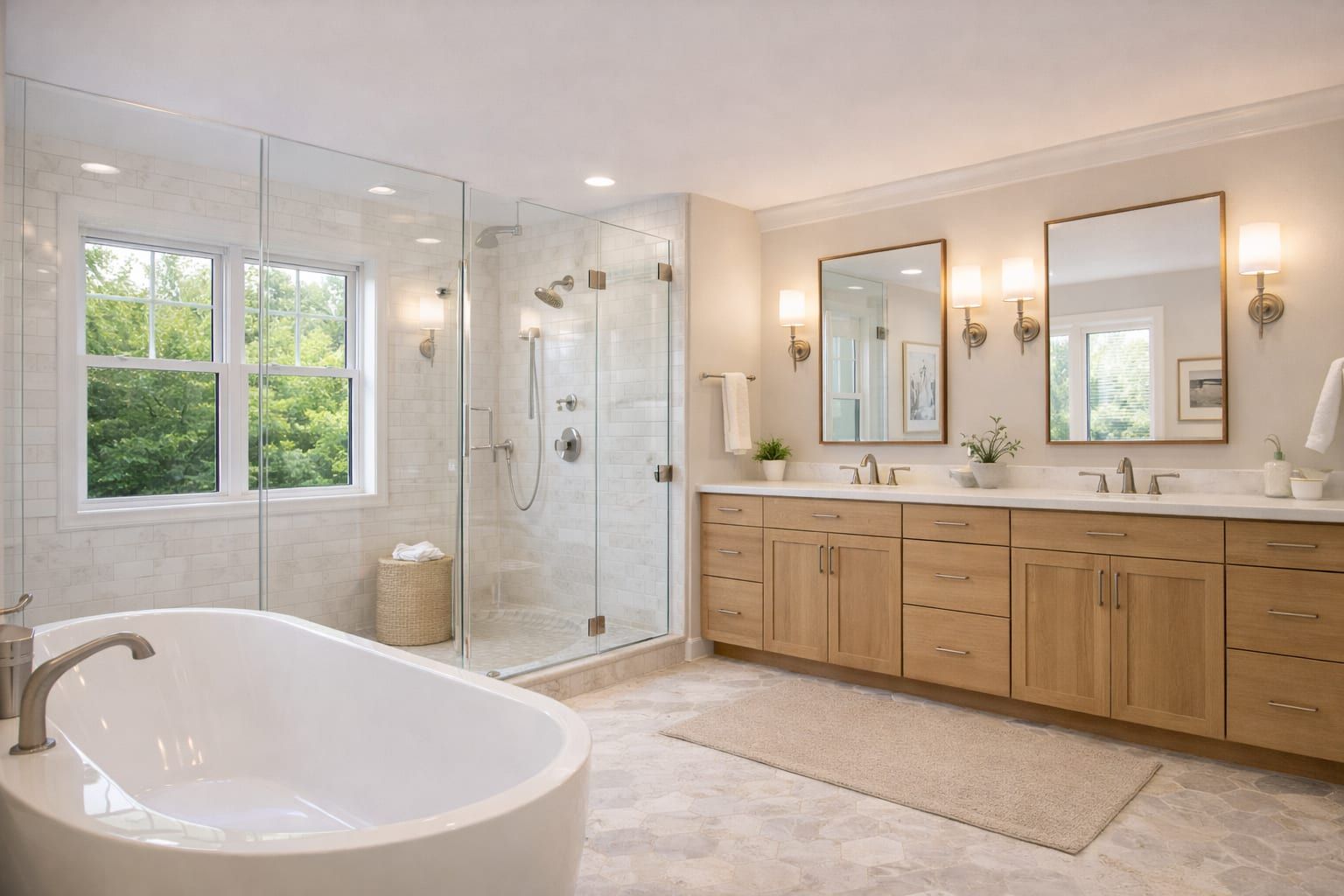
Kitchen timelines get messy when the room has to stay partly usable and the scope is still changing at the same time. The cleaner path is to treat the schedule as a sequence plan, not just a list of tasks.
This guide covers the kitchen-remodel timing questions that matter most when the home is occupied and the room cannot simply go offline without a plan.
Quick takeaways
- Define the full kitchen scope before scheduling around use. Cabinets, counters, backsplash, flooring, paint, and touch-ups affect each other.
- Materials and sequencing decide the timeline more than wishful dates do. Cabinet lead times, counter measurements, and backsplash timing all move the schedule.
- Usability needs should be named early. Sink access, appliance downtime, and room staging change how a kitchen can be phased.
- Final touch-ups belong near the end. Paint, hardware alignment, and closeout details usually happen after the dustiest work is over.
1. Start with the real kitchen scope
Occupied-home timelines get harder when the scope is described too narrowly at first.
Examples:
- “We just need cabinets” may also mean drywall repair, counters, backsplash, flooring, and touch-up paint.
- “We just need floors” may also affect appliances, doors, thresholds, and baseboard work.
- “We just need a kitchen refresh” may really mean several finish layers that should be planned together.
If the kitchen crosses more than one finish, say so up front. That usually speeds the schedule instead of slowing it down.
Helpful companion page: Kitchen updates.
2. Material readiness affects kitchen timelines more than people expect
A realistic kitchen timeline depends on whether the big decisions are already made:
- cabinet layout
- appliance specs
- countertop plan
- backsplash tile selection
- flooring product and thickness
- hardware and trim details
Missing product details do not always block the project, but they do change how much can be scheduled confidently. When the materials are still fluid, the schedule should stay honest and flexible.
Helpful related guide: Cabinet installation timeline.
3. Early kitchen phases are about prep, protection, and reference lines
In an occupied home, the early phase usually includes:
- confirming what is staying usable
- setting a staging and protection plan
- repairing obvious wall or substrate problems
- handling the disruptive prep steps first
- establishing the cabinet and countertop reference lines
This is usually the right time to catch room-condition issues before the finish surfaces go in.
4. Cabinets, counters, and backsplash create the middle of the schedule
This is where many kitchens slow down:
- cabinets need to be installed and aligned
- countertop measurements or install timing have to land correctly
- backsplash work usually waits on the counter line
- appliance clearances and filler details need to be confirmed before closeout
If these decisions are made in the wrong order, the schedule gets longer and the finished kitchen often needs extra patching or rework.
Helpful related guide: Kitchen remodel order of work.
5. Flooring, paint, and closeout details usually come later
The cleanest kitchen schedules usually protect the final surfaces from the messier steps. That often means:
- heavy install work before final flooring
- final paint after the disruptive work is mostly done
- touch-up drywall and trim corrections closer to the end
- hardware, caulk, and alignment checks during closeout
This is one reason a kitchen can look “almost done” for a short period before it is truly finished. The final look usually comes from the last details.
6. What usually slows an occupied-home kitchen timeline down?
Common timeline stretchers:
- late product changes
- countertop delays or unclear measurements
- backsplash layout decisions made too late
- hidden wall or floor repair after removal
- unclear sink or appliance downtime expectations
- trying to keep too much of the room functional at once
None of these automatically kills the project. They just need to be acknowledged early so the schedule stays realistic.
7. What to send for a cleaner kitchen timeline conversation
Usually this is enough:
- wide kitchen photos
- close-ups of the cabinet and backsplash walls
- notes on what must stay usable
- product links if selected
- rough room measurements if you have them
- any move-in, guest, or listing deadline
If you want a simple message format, use the quote request checklist.
FAQs
Can a kitchen remodel be phased if I am living in the home?
Often, yes. The key is deciding what has to stay usable and what can go offline first. That changes how the work is sequenced.
What usually causes kitchen schedules to slip?
Late material decisions, unclear countertop timing, unexpected wall or floor repairs, and trying to coordinate several finish trades without a clear order of work.
Do I need every product selected before reaching out?
No. A clear scope and a few photos are enough to start. Product links just make the schedule more accurate faster.
What is the most useful first step?
Share the actual kitchen scope, your photos, and what must stay functional. That creates a better planning conversation than asking for a generic timeline without room details.
Next steps
If you are still mapping the kitchen sequence, start with Kitchen remodel order of work.
If you are ready to send the room photos and your constraints now, use Request a quote.
Need help planning the next step?
Share photos and rough measurements to get a clear yes/no on fit and the right follow-up.