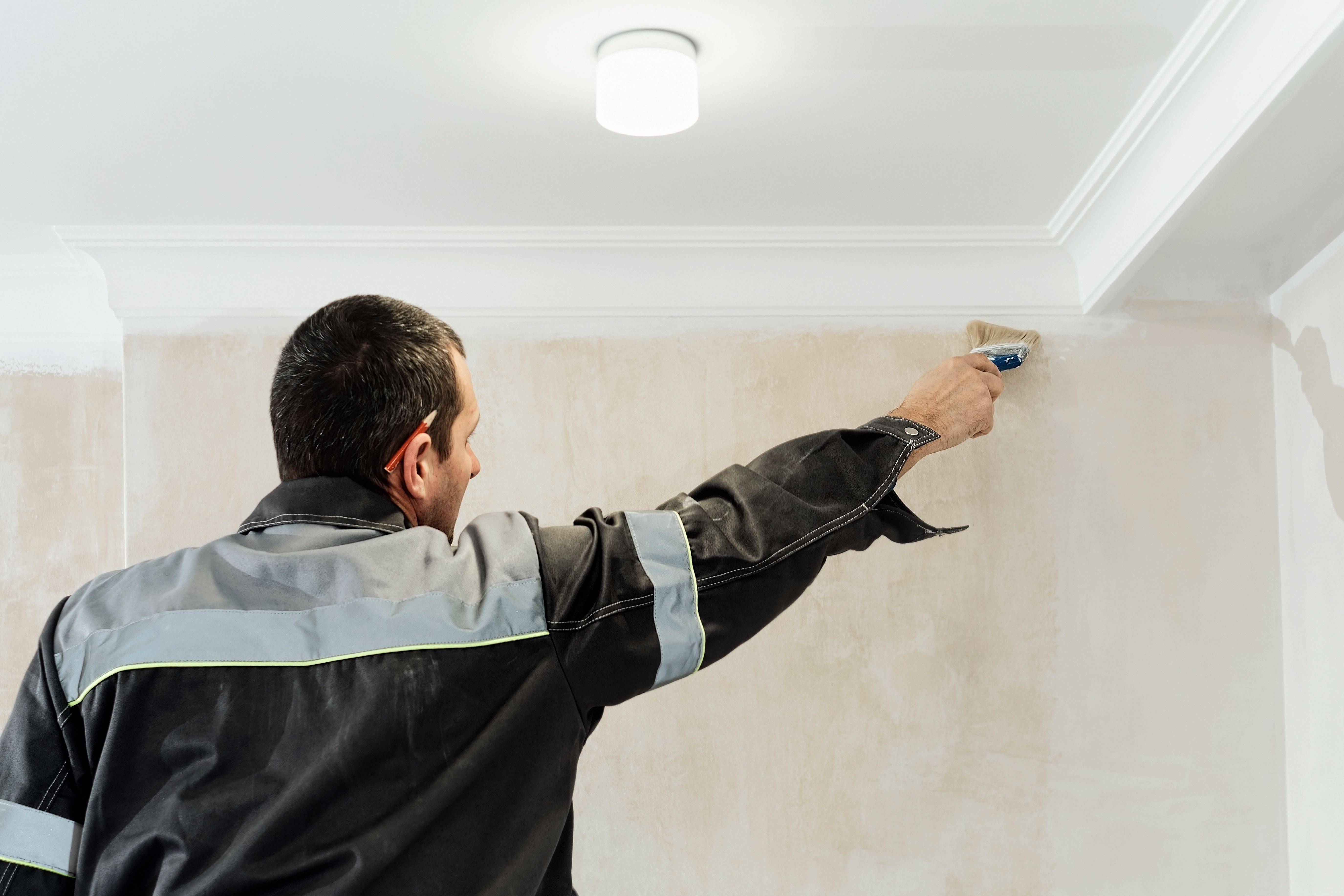
Most paint “failures” aren’t the paint’s fault. They’re usually the result of surface prep issues, moisture problems, or application decisions that don’t match the conditions. The good news is that many of the issues homeowners notice—streaks, shiny patches, peeling—are preventable when you know what causes them.
This guide covers common paint problems, what they typically mean, and the practical steps that reduce the risk of seeing them again.
Quick takeaways
- Surface prep is the foundation. Clean, dull, sound surfaces help paint bond and look consistent.
- Primer is a tool, not a default. Use it when it solves a specific problem.
- Moisture is a major variable. Bathrooms, kitchens, and exterior walls need realistic expectations and correct prep.
- Technique and timing matter. Lap marks and flashing are often process issues, not “bad paint.”
1) Flashing (patches that show through)
What it looks like: certain areas look shinier or duller at different angles, often around repairs.
Common causes:
- Uneven porosity (drywall patch absorbs differently than old paint)
- Spot-primed patches without a consistent priming strategy
- Uneven film thickness from inconsistent application
How to prevent it:
- Feather and sand repairs smoothly
- Use the right priming approach for the situation
- Apply topcoats consistently (roller type, pressure, coverage)
If your project includes significant patching, drywall repair and paint planning should be discussed together: Drywall service.
2) Lap marks (visible overlap lines)
What it looks like: darker lines or streaks where roller passes overlap.
Common causes:
- Paint drying too fast before the next pass blends in
- Working in sections that are too large
- Heat, low humidity, and strong airflow
How to reduce the risk:
- Work in manageable sections
- Maintain a wet edge (blend before the previous pass dries)
- Use consistent technique and coverage
3) Peeling or poor adhesion
What it looks like: paint lifts or peels away, sometimes in sheets.
Common causes:
- Painting over glossy surfaces without deglossing/sanding
- Painting over oils, soap residue, or contamination
- Moisture behind the surface
How to prevent it:
- Clean thoroughly (especially kitchens and bathrooms)
- Properly prep glossy surfaces (dull/sand where appropriate)
- Address moisture sources before painting
For exterior work, adhesion is even more dependent on prep and weather timing: Exterior house painting.
4) Bubbles or blisters
What it looks like: raised bubbles that may pop or flake later.
Common causes:
- Painting over damp surfaces
- Moisture trapped behind paint
- Painting in direct hot sun (exteriors)
How to prevent it:
- Confirm surfaces are dry
- Improve ventilation
- Follow product temperature/humidity guidance
5) Cracking, checking, or “alligatoring”
What it looks like: cracks in the paint film, sometimes in a pattern.
Common causes:
- Too many heavy coats over time
- Old, brittle layers underneath
- Incompatible coating systems
Prevention often requires stabilizing or removing failing layers instead of painting over them.
6) Roller stipple and texture differences
What it looks like: uneven texture on walls, or noticeable difference between cut-in areas and rolled areas.
Common causes:
- Different tools leaving different texture
- Uneven pressure or paint load
- Repairs not feathered smoothly
How to reduce it:
- Match roller nap to wall texture
- Keep technique consistent across the wall
- Smooth repairs and spot prime appropriately
7) Bleed-through (stains returning)
What it looks like: water stains, smoke stains, or tannins showing through later.
Common causes:
- Not using a stain-blocking primer where needed
- Painting over an active moisture issue
If you have stains, it helps to note them during the quote stage so primer strategy can be planned: Quote request checklist.
8) Brush marks on trim and doors
What it looks like: visible strokes or ridges, especially in shiny finishes.
Common causes:
- Heavy application
- Inconsistent brush technique
- Lack of surface prep (dents and sanding marks show more in semi-gloss)
How to reduce it:
- Prep trim and doors thoroughly
- Use consistent technique and the right tools
- Choose sheen intentionally (higher sheen shows more)
This companion guide helps with sheen selection: Paint sheen guide.
9) Runs, sags, and drips
What it looks like: thick curtains of paint, drips that harden, or a rippled surface where paint slid before it set.
Common causes:
- Applying paint too heavily in one pass
- Working a surface too long as the paint starts to set
- Painting in conditions that slow drying (very humid rooms) or using the wrong tools for the surface
How to reduce the risk:
- Apply thinner, more even coats instead of trying to cover in one heavy pass.
- On doors and trim, keep your technique consistent and “lay off” lightly instead of repeatedly brushing the same area.
- Let coats dry enough before recoating, especially on detail surfaces that get handled.
If you do get a run, the durable fix is usually to let it dry, sand it smooth, then repaint that section.
10) Mildew and recurring bathroom paint issues
What it looks like: black/gray spotting, especially on ceilings, around showers, or near windows.
Common causes:
- High humidity with poor ventilation
- Paint film staying damp for long periods
- Moisture sources that are not addressed (leaks, chronic condensation)
How to reduce the risk:
- Improve ventilation (use the exhaust fan and allow it to run long enough to clear humidity).
- Clean and treat mildew properly before painting. Painting over it usually means it returns.
- Use products designed for higher-humidity environments when appropriate.
If you see ongoing moisture issues, treating it as “paint only” often leads to repeat problems. The root cause (humidity or leaks) needs to be part of the plan.
11) Burnishing (shiny rub marks on walls)
What it looks like: shiny spots where people touch or rub the wall (hallways, stairways, around switches), even though the wall paint is not glossy.
Common causes:
- Heavy rubbing or aggressive cleaning on lower-sheen paints
- Paint that has not fully cured yet
- High-traffic zones using a sheen that is not durable enough for the use
How to reduce the risk:
- Choose a wall sheen that matches how the room is used (more traffic usually needs more durability).
- Avoid aggressive cleaning early on; let paint cure.
- If a wall burnishes easily, the best fix is often repainting the wall with a more durable sheen rather than repeated spot touch-ups.
12) A prevention checklist (simple and effective)
- Clean surfaces thoroughly (especially kitchens and bathrooms)
- Repair and sand as needed
- Prime where conditions call for it (stains, major repairs, glossy surfaces)
- Do a small test area first when surfaces are questionable (glossy paint, stains, unknown coatings)
- Plan for realistic dry and cure time
- Use consistent tools and technique
If you want a homeowner-friendly prep list before work begins, start here: Interior painting prep checklist.
13) FAQs
Do I always need primer?
No. Primer is used when it solves a specific problem: bonding to slick surfaces, blocking stains, or equalizing porosity after repairs.
Why do some walls look different at night?
Directional lighting can highlight texture and sheen differences. Consistent prep and consistent application reduce this.
Can humidity really affect paint performance?
Yes. Humidity and temperature influence drying, adhesion, and cure behavior. Ventilation helps.
Why does paint feel tacky for days?
Some paints take longer to cure, especially in humid conditions or when airflow is limited. Even when a surface feels dry, it can still be soft. Keeping good ventilation and avoiding heavy contact early helps reduce scuffs and sticking.
Why do I see roller fuzz or little bumps in the paint?
Lint and debris can come from rollers, dusty walls, sanding dust, or even pet hair in occupied homes. Dust control during prep and using clean tools reduces the risk. If bumps are severe, the typical fix is light sanding once dry and another coat.
Can I fix lap marks without repainting the whole wall?
Sometimes, but it depends on how visible they are and the lighting. Because lap marks are often a film thickness issue, spot fixes can show. Repainting the full wall with consistent technique is often the cleanest path.
Should I sand between coats?
Not always, but light sanding can help when you are chasing a very smooth finish (trim and doors) or when dust or roller texture needs to be knocked down between coats. Sanding also helps when repainting over a rough surface so the final sheen looks more even.
Next steps
- Painting service details: Painting
- Prep checklist: Interior painting prep
- Start a quote request: Request a quote
Need help planning the next step?
Share photos and rough measurements to get a clear yes/no on fit and the right follow-up.