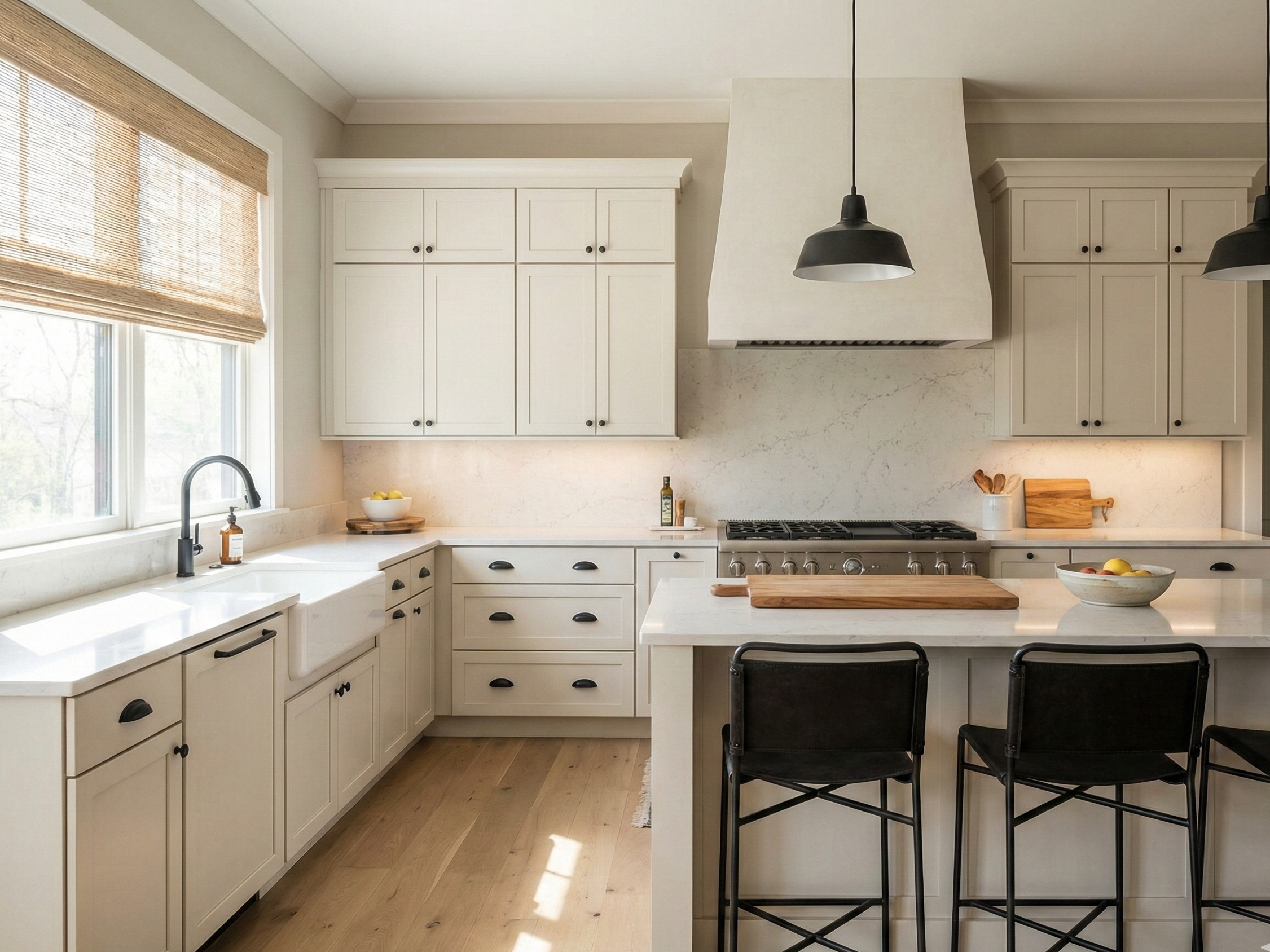
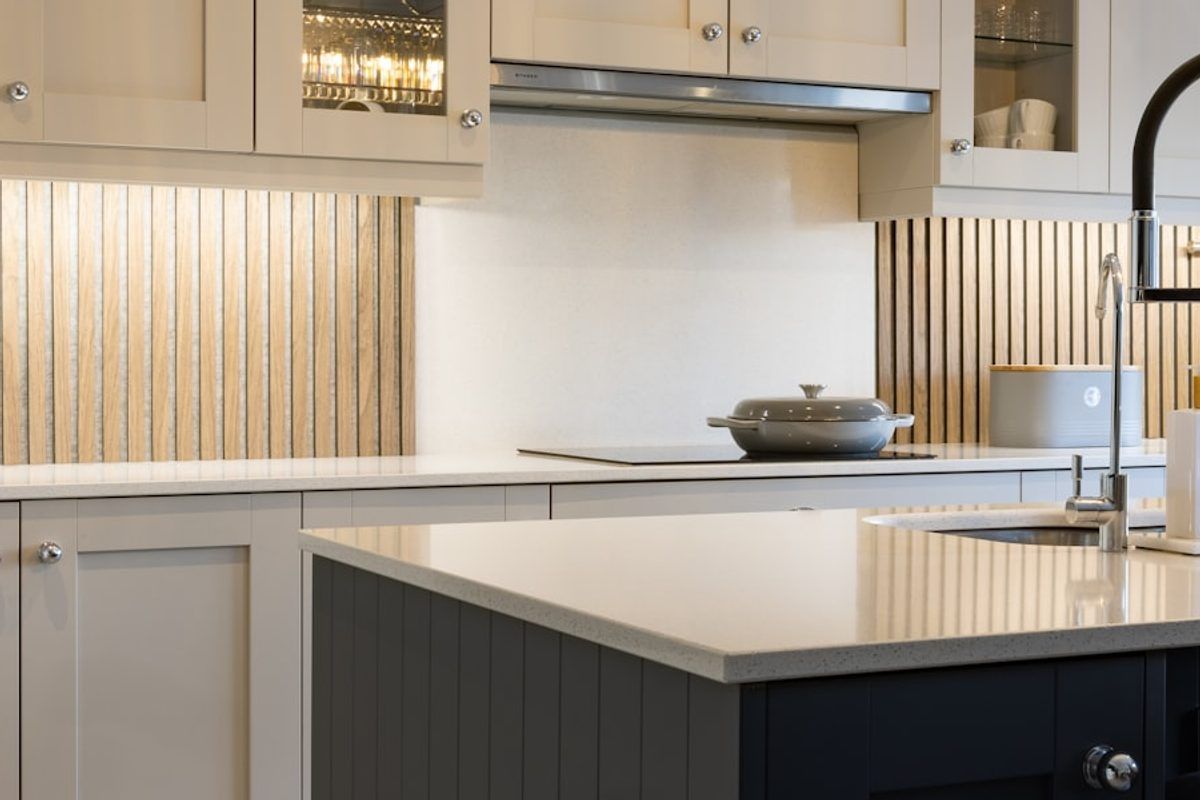
If you are trying to understand cabinet installation cost in Lexington, the most useful question is not “what is the install rate per cabinet?” It is “what does the room need so the cabinets look straight, work well, and finish cleanly?”
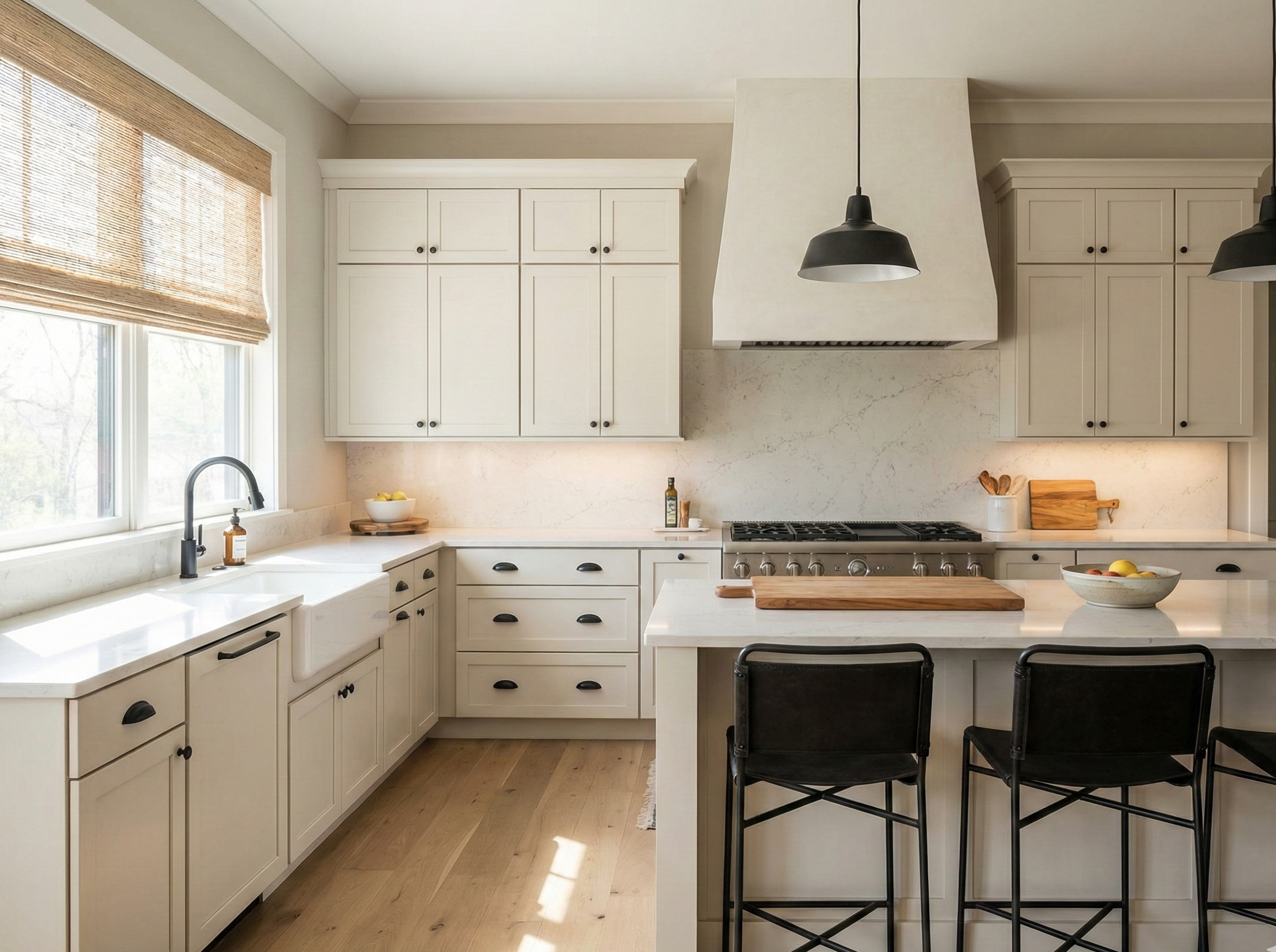
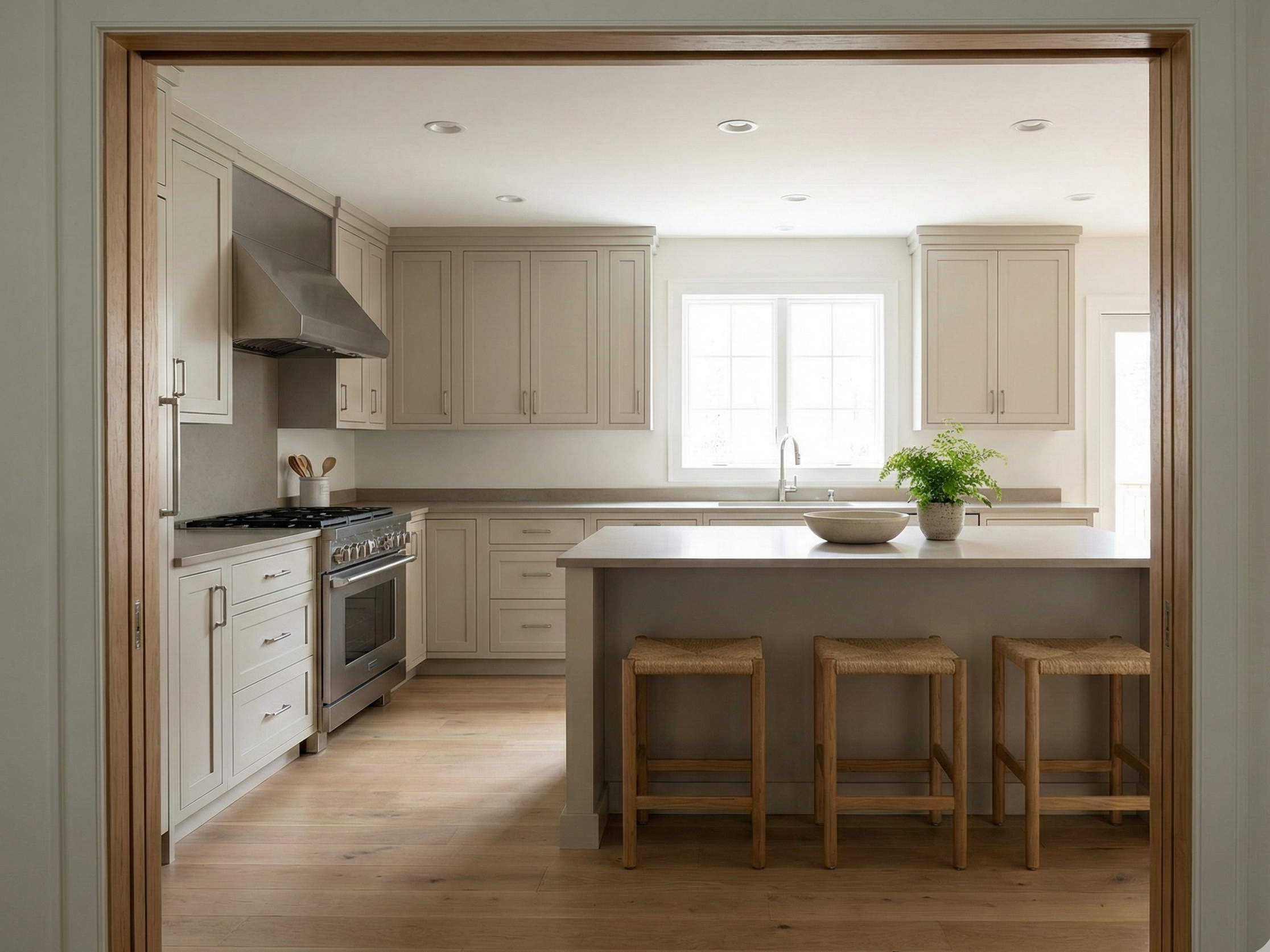
Cabinets are rarely just boxes on a wall. Level lines, fillers, panels, appliance clearances, hardware planning, and coordination with counters or backsplash work usually decide the estimate more than the cabinet count alone.
Quick takeaways
- Layout complexity matters as much as quantity. Corners, tall runs, fillers, panels, and appliance openings change the install more than a simple box count.
- Real room conditions move the estimate fast. Uneven floors, crooked walls, soffits, and tight spaces add labor.
- Appliance and counter coordination are part of the cabinet plan. Those constraints affect spacing and the finished look.
- Hardware and closeout details matter. Alignment, reveal consistency, and built-in-looking edges are part of what people are really paying for.
1. Cabinet quantity is only the start
Two kitchens with the same cabinet count can install very differently.
What changes the scope:
- corner cabinets
- appliance openings
- tall pantry runs
- end panels and exposed sides
- filler pieces and scribes
- islands or mixed cabinet depths
This is why supplier plans and room photos are so useful. They show the install pattern, not just the number of boxes.
Helpful related guide: Cabinet installation planning guide.
2. Room condition usually drives the first real labor decision
Cabinets need one consistent visual line, even when the room is imperfect.
Common room-condition cost drivers:
- out-of-level floors
- walls that are not straight
- soffits or low-clearance areas
- tight corners where doors can collide or lose clearance
- damaged walls that need prep before install
These are not unusual problems. They are normal reasons cabinet installs require shimming, scribing, filler planning, and more finish attention than homeowners expect.
3. Appliance openings and clearances can reshape the layout
Cabinets do not live alone. The layout also has to work with:
- refrigerators
- ranges
- dishwashers
- microwaves
- hood or vent clearances
If appliance specs change late, the install plan often changes with them. Even a few inches can affect fillers, panel placement, and door usability in a finished kitchen.
4. Fillers, panels, and hardware are part of the finished look
These details often get treated like accessories, but they are part of the real install:
- fillers keep doors from colliding with walls or appliances
- panels finish exposed cabinet sides
- toe-kick details affect the final read at the floor
- hardware alignment affects how intentional the kitchen feels
If the goal is a built-in look, these items should be part of the estimate conversation from the beginning.
Helpful related guide: Cabinet hardware placement guide.
5. Counters, backsplash, and paint coordination often add scope
Cabinets touch several other finish layers:
- countertop measurement timing
- backsplash start and stop points
- drywall repair behind removed cabinets
- touch-up paint where lines or heights changed
- trim or caulk cleanup at the end
One reason cabinet estimates vary is that some installs are isolated, while others are part of a larger kitchen sequence that has to stay coordinated from start to finish.
Helpful related guide: Kitchen remodel order of work.
6. What to send for a clearer cabinet quote
Usually this is enough:
- supplier plan or basic layout if you have it
- cabinet count
- wide room photos
- appliance notes or product links
- photos of any tight corners, soffits, or uneven areas
- your timeline and whether counters or backsplash are part of the same project
If you want a simpler message format, use the quote request checklist.
FAQs
Why do cabinet installation estimates vary so much?
Because the room and layout vary. Cabinet count matters, but fillers, panels, corners, appliances, and room condition usually decide the difference.
Can you price cabinets from the supplier plan alone?
It helps a lot, but room photos still matter. The room shows how straight the surfaces are and what finish details may need attention.
What makes cabinet quotes go faster?
Supplier plan, cabinet count, room photos, and appliance notes. Tight-corner photos are especially helpful.
What is the most common underestimated detail?
Fillers and room condition. They are often the difference between a simple install and a kitchen that needs more layout adjustment to look right.
Next steps
If you are still gathering measurements and appliance details, start with Cabinet installation planning guide.
If you are ready to send the room photos and scope now, use Request a quote.
Need help planning the next step?
Share photos and rough measurements to get a clear yes/no on fit and the right follow-up.