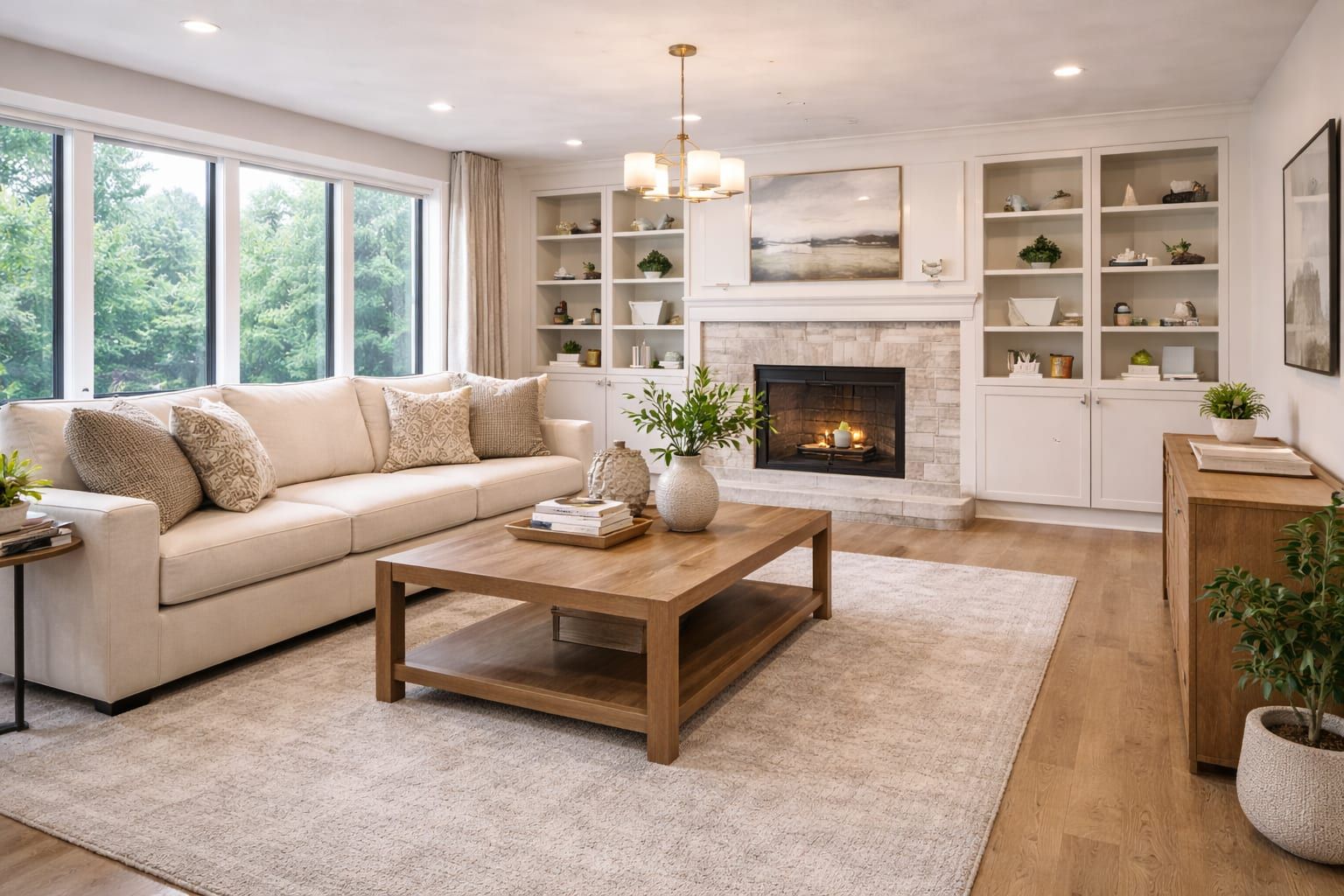
Accessibility Upgrades for Aging-in-Place
Aging-in-place modifications allow homeowners to remain independent and safe as mobility changes. Strategic upgrades prevent falls, ease daily activities, and provide peace of mind. This guide covers practical, cost-effective accessibility improvements.
Quick takeaways
- Grab bars in bathroom (toilet, shower, tub) offer the highest safety ROI and prevent most bathroom falls.
- Curbless showers eliminate trip hazards and improve accessibility when you’re ready for a full remodel.
- Lever handles, lighting, and non-slip flooring are lower-cost wins that add up.
- Plan upgrades in order: quick wins first, then larger projects when you replace flooring or remodel.
Most Impactful Upgrades (Start Here)
1. Bathroom grab bars
- Where: Toilet, shower, tub
- Cost: $75-200 per bar installed
- Impact: Prevents 70%+ of bathroom falls
- ROI: Highest safety upgrade per dollar
2. Curbless (zero-threshold) shower entry
- What: No step to enter shower
- Cost: $3,000-8,000 (remodel required)
- Impact: Eliminates trip hazard, wheelchair accessible
- Best for: Major bath remodel or new construction
3. Lever door handles (vs. knobs)
- What: Replace round knobs with lever handles
- Cost: $15-40 per door
- Impact: Easier with arthritis or weak grip
- DIY-friendly: Yes
4. Improved lighting
- What: Brighter bulbs, add fixtures, motion sensors
- Cost: $50-500
- Impact: Prevents trips, improves visibility
- Quick win: Often overlooked, huge impact
5. Non-slip flooring
- What: Textured tile, slip-resistant finishes
- Cost: Varies (part of flooring choice)
- Impact: Reduces fall risk
- Plan ahead: Choose when replacing flooring anyway
Bathroom Modifications
Grab bars:
- Toilet (side and rear walls)
- Shower (vertical and horizontal)
- Tub entry/exit
- Proper anchoring critical (studs or blocking)
Shower bench:
- Built-in tile bench or fold-down seat
- Height: 17-19” (standard chair height)
- Allows seated showering
Handheld showerhead:
- Mounted on slide bar
- Use while seated or standing
- Cost: $50-150
Comfort-height toilet:
- 17-19” seat height (vs. standard 15”)
- Easier sit-to-stand transitions
- Cost: $200-400
Barrier-free shower:
- Roll-in design for wheelchairs
- Requires floor slope and waterproofing
- Cost: $5,000-12,000 (full remodel)
Slip-resistant flooring:
- Textured tile
- Smaller tiles = more grout = better traction
- Avoid glossy finishes
Task lighting:
- Above vanity (bright, shadow-free)
- In shower
- Night lights
Kitchen Modifications
Lowered counters (wheelchair accessible):
- 30-34” height (vs. standard 36”)
- Requires remodel
- Cost: $2,000-5,000
Pull-out shelves:
- Retrofit existing cabinets
- Easier access than reaching into deep cabinets
- Cost: $100-300 per cabinet
Lever faucets:
- Single-handle lever style
- Easier than twist knobs
- Cost: $100-300
Task lighting:
- Under-cabinet lights
- Pendant over work areas
- Cost: $200-800
D-pull cabinet hardware:
- Easier to grip than knobs
- Cost: $3-8 per pull
Side-opening oven (vs. drop-down door):
- Wall oven with side-swing door
- Safer, no reaching over hot door
- Cost: $1,500-3,000+ (appliance remodel)
Entrance and Hallway Modifications
Ramps:
- 1:12 slope (1” rise per 12” length)
- Handrails both sides if over 6” rise
- Cost: $1,500-5,000 installed
Zero-step entry:
- Remove step at main entrance
- May require grading adjustment
- Cost: $500-2,000
Wider doors:
- 36” clear opening (vs. standard 32”)
- Allows wheelchair passage
- Requires new door and frame
- Cost: $500-1,200 per door
Lever handles:
- Replace knobs on all doors
- Interior and exterior
- Cost: $15-40 per door
Improved lighting:
- Motion-sensor lights
- Illuminate pathways automatically
- Cost: $50-150 per fixture
Remove trip hazards:
- Eliminate thresholds where possible
- Secure loose rugs
- Clear pathways
Bedroom Modifications
Accessible closet:
- Lower hanging rods (48” high)
- Pull-down rods available
- Cost: $100-500
Task lighting:
- Bedside lamps with easy switches
- Motion-sensor night lights
- Cost: $50-200
Lever handles:
- Interior doors
- Closet doors
Adjustable-height bed:
- Makes transfers easier
- Cost: $500-3,000+
Clear pathways:
- 36” wide minimum
- Move furniture if needed
Stairways
Handrails both sides:
- Code may only require one side
- Two sides safer
- Cost: $200-800
Stair lift:
- Mechanized chair on rail
- Major investment but enables independence
- Cost: $3,000-10,000+
Improved lighting:
- Light switches at top and bottom
- Motion sensors
- Cost: $100-400
High-visibility stair nosing:
- Contrasting color on edge of each step
- Prevents missteps
- Cost: $50-150
Non-slip treads:
- Adhesive or built-in texture
- Cost: $50-200
Smart Home Technology
Voice assistants:
- Control lights, thermostats, etc. by voice
- Cost: $50-200
Video doorbells:
- See visitors without answering door
- Cost: $100-250
Smart lights:
- Control from phone or voice
- Motion sensors
- Cost: $50-150 per room
Smart locks:
- Keypad or app entry
- No fumbling with keys
- Cost: $150-300
Medical alert systems:
- Fall detection and emergency call
- Cost: $25-50/month
Budget Tiers
Under $1,000:
- Grab bars (3-4)
- Lever handles (all doors)
- Improved lighting
- Non-slip bath mat
- Handheld showerhead
$1,000-5,000:
- All items above plus:
- Comfort-height toilet
- Shower bench
- Ramp or zero-step entry
- Additional lighting
- Smart home basics
$5,000-15,000:
- All items above plus:
- Curbless shower remodel
- Wider doors (1-2)
- Kitchen pull-out shelves
- Stair lift
- Comprehensive lighting upgrade
$15,000+:
- Full bathroom remodel (barrier-free)
- Kitchen modifications (lowered counters)
- Multiple wider doors
- Elevator or lift
- Whole-home accessibility package
Planning Approach
Prioritize by:
- Safety (fall prevention first)
- Daily impact (what’s used most)
- Cost-effectiveness (biggest impact per dollar)
- Future-proofing (anticipate needs)
Start with non-invasive:
- Grab bars
- Lever handles
- Lighting
- Smart home devices
Plan major remodels strategically:
- If remodeling bathroom anyway, add accessibility features
- Cheaper to do it once than retrofit later
Consider universal design:
- Features that work for everyone
- Doesn’t “look” like accessibility modification
- Examples: Lever handles, good lighting, zero-threshold showers
Funding Options
Personal funds:
- Most control, fastest timeline
Home equity:
- HELOC or refinance
- Tax-deductible interest (consult CPA)
Grants and assistance:
- USDA rural development
- Local Area Agencies on Aging
- Veterans benefits (if applicable)
- Medicaid waiver programs (varies by state)
Tax deductions:
- Medical expense deduction (if qualify)
- Consult CPA
Aging-in-place modifications range from simple (grab bars, lever handles, lighting) to complex (curbless showers, wider doors, ramps). Start with high-impact, low-cost safety upgrades, then plan larger modifications strategically as needs change. Most important: address fall prevention (grab bars, lighting, non-slip surfaces) first—falls are the leading cause of injury for seniors.
Need help planning the next step?
Share photos and rough measurements to get a clear yes/no on fit and the right follow-up.